
Ireland's pharma and medtech sector employed a record 96,848 people in 2025, up 7.7% in a year, according to the CSO. In 2026 the picture is more mixed, with mostly smaller hiring announcements, several cuts and fewer work permits for pharma employers. Official forecasts still point to growth in 2027, with US tariffs and onshoring as the main risk.
- Record headcount: CSO counts 96,848 employees in pharmaceutical and medical technology firms in 2025, up from 89,923 in 2024 and 60,537 in 2019.
- Pay: median annual earnings in the sector were €68,591 in 2025 (CSO), and the total wage bill reached €7.9 billion.
- Europe: pharma and medtech make up 25.5% of Irish manufacturing employment, against 4.2% across the EU, on Eurostat 2023 data.
- 2026 announcements: the largest confirmed was West Pharmaceutical Services in Dublin, with 330 jobs. Cuts were announced at Viatris (about 340 roles, from 2028) and Pfizer Ringaskiddy (about 100).
- Permits: employment permits for pharma and medtech employers fell from 1,118 in 2024 to 886 in 2025, and are down again in January to October 2026 (671 against 717).
- 2027: the Government's skills forecast expects over 21,000 additional biopharma jobs by 2027. The ESRI forecasts overall employment growth of 1.7% in 2027.
What do the 2026 numbers show?
The most complete count comes from the Central Statistics Office. Its release, Pharmaceutical and Medical Manufacturing in Ireland 2019 to 2025, published on 24 September 2026, uses payroll (PAYE) records. It counts 96,848 employees in 2025, measured as full-year equivalents. That is 6,925 more than in 2024 and 60.0% more than in 2019. The CSO says the total wage bill "rose by 98.1%" over the same six years, to €7.9 billion.

The CSO definition is broad. It covers seven activity codes: basic pharmaceuticals and preparations, some organic chemicals, electromedical equipment, medical and dental instruments, and the wholesale and specialist retail of pharmaceutical and medical goods. So it is not only factory jobs. Other official series give smaller numbers because they measure different things, as shown below.
| Source and measure | Latest figure |
|---|---|
| CSO, pharma and medtech firms, employees, 2025 (CSO) | 96,848 |
| CSO, of which in foreign-owned firms, 2025 (CSO) | 83,317 (86.0%) |
| DETE Annual Employment Survey, foreign-owned agency clients, Chemicals sector, permanent full-time, 2025 (DETE) | 39,411 |
| DETE Annual Employment Survey, foreign-owned agency clients, Medical Devices, permanent full-time, 2025 (DETE) | 41,516 |
| Eurostat, pharmaceutical manufacturing (NACE C21), persons employed, 2023 (Eurostat) | 28,184 |
| Eurostat, medical and dental instruments (NACE C32.5), persons employed, 2023 (Eurostat) | 41,225 |
The Department of Enterprise survey of agency-assisted companies shows the same direction of travel in 2025. It says "the Chemicals sector added 1,458 jobs (up 3.5%)" and medical devices added 861 jobs (up 2.1%). Across all sectors, agency-assisted permanent full-time employment rose 1.2% to 511,786.
For 2026 itself there is no full-year count yet. The CSO payroll series runs to 2025. The best 2026 signals are IDA Ireland's mid-year results and company announcements. On 1 July, IDA said it had won 190 investments in the first half of 2026, "with a commitment to create 10,410 jobs across the economy". It named life sciences among four leading sectors but gave no sector split. Our Ireland pharma employment tracker follows these series as they update.
Where are the jobs, by sub-sector and region?
Foreign-owned multinationals dominate. They employed 83,317 of the 96,848 people in 2025. Irish-owned firms employed 13,531, a figure that has grown every year since 2019. Medical devices are as large an employer as pharma. In the DETE survey, foreign-owned medical device firms had slightly more permanent full-time staff than foreign-owned chemicals and pharma firms in 2025.
The CSO's county figures, matched to Census 2022, show where sector employees live. Cork leads with 17.3%, followed by Dublin with 15.6% and Galway with 15.1%. Then come Limerick (5.5%), Mayo (5.4%), Tipperary (5.1%) and Waterford (4.9%). Galway's share reflects its medtech cluster. That pattern held in 2026 announcements, with Medtronic, Boston Scientific and Luminate Medical all investing in Galway.
The workforce is also becoming more international. CSO table PMMA04 shows 24,064 employees of non-Irish nationality in 2025, almost double the 12,648 in 2019. Irish nationals still make up 75.2% of the total. Women hold 42.6% of jobs, and 56.6% of workers had a third-level qualification in 2022. For live vacancies by company and county, see our Who's hiring in Ireland page.
What were the biggest life science job announcements of 2026?
We checked IDA Ireland releases, company releases and named reports for every life science announcement between 1 January and 10 November 2026. The table lists those with a confirmed figure or a confirmed investment. Several of the largest projects did not state any new permanent job numbers.
| Company and place | Jobs | Investment | Date and source |
|---|---|---|---|
| West Pharmaceutical Services, Damastown, Dublin 15 (drug delivery manufacturing) | 330 created (first announced in 2024) | Not disclosed; 165,000 sq ft expansion | 31 Mar 2026, IDA Ireland |
| Luminate Medical, Galway (medtech) | 130 over three years, some in the US | $21m funding round | 7 Jan 2026, Irish Times report |
| Medtronic, Galway (cardiac software hub) | Initial 85 roles | Not disclosed | 21 May 2026, IDA Ireland |
| Primecore, Cork and Dublin (life science services) | 50 across Ireland and the US | Not disclosed | 2 Jun 2026, Silicon Republic report |
| Evumed, Cork (European headquarters) | 30 | Not disclosed | 11 May 2026, Irish Examiner report |
| Isla Health, Sligo (digital health) | 20 | Not disclosed | Apr 2026, Sligo County Council |
| Novo Nordisk, Athlone (oral GLP-1 manufacturing) | Up to 500 construction jobs; no new permanent figure | €432m | 2 Mar 2026, Novo Nordisk release |
| Boston Scientific, Galway (R&D laboratories) | Not disclosed | €75m | 15 Apr 2026, IDA Ireland |
| Astellas, Tralee (second aseptic filling line) | Not disclosed; roles "by 2029" | Not disclosed | 14 Sep 2026, Irish Examiner report |
Two points stand out. First, the single biggest number, West's 330 jobs, came at the opening of a plant whose jobs were announced in 2024. IDA's release says "330 jobs have been created", and West now employs over 1,400 people in Ireland. Second, the largest capital commitment, Novo Nordisk's €432m in Athlone, adds manufacturing capacity for oral GLP-1 medicines. Its release says the existing 260 employees will run it and gives no new permanent job count. Our earlier report covers the Astellas Tralee expansion in more detail.
Cuts and closures announced in 2026
| Company and site | What was announced |
|---|---|
| Viatris, Damastown, Dublin (generic medicines) | Closure affecting about 340 people; wind-down from the first half of 2028 to end 2028, no immediate losses (RTÉ, 27 Feb 2026) |
| Pfizer, Ringaskiddy, Co Cork | Around 100 roles, affecting staff in the last quarter of 2026 (RTÉ, 22 Apr 2026) |
| Boston Scientific, Ireland | Collective redundancy notice on 22 July; number not disclosed (RTÉ, 29 Jul 2026) |
| National Standards Authority of Ireland | Exit from medical product certification; up to 20 staff (Irish Times, 8 Aug 2026) |
| Enfer Medical, Naas, Co Kildare (clinical laboratory) | Collective redundancy notice on 6 October; number not disclosed (RTÉ, 6 Nov 2026) |
Pfizer said: "Reducing jobs is always the very last resort and we have been doing all we can to minimise the impact on our people." Boston Scientific told RTÉ it is "committed to our long-term future in the country".
How does Ireland compare with the rest of Europe?
Eurostat's structural business statistics allow a like-for-like comparison of manufacturing employment. The latest year with Irish pharma data is 2023, because Eurostat marks the Irish 2024 figure confidential. In 2023, 28,184 people worked in Irish pharmaceutical manufacturing (NACE C21) and 41,225 in medical and dental instruments (NACE C32.5). Together that is 25.5% of all Irish manufacturing employment, our calculation from the same table.

No other country comes close on concentration. Denmark is second at 12.5%, almost all of it in pharma. Switzerland follows at 10.9%, using Eurostat estimates. The EU average is 4.2%. In absolute numbers Ireland is smaller: Germany employed 169,200 people in pharma manufacturing and France 96,547. Ireland's medtech workforce of 41,225 was the fourth largest of the countries compared, behind only Germany, France and Italy, all much bigger economies.
This concentration cuts both ways for job seekers. It means a dense market of employers and transferable roles within a short drive. It also means that a sector-wide shock, such as US trade policy, would be felt more in Ireland than almost anywhere else in Europe. For pay comparisons across countries, see our EU pharma salary guide. The GICI 2026 competitiveness index placed Ireland second in the world for the chemical and pharma industry.
Which roles are in demand, and what new roles are appearing?
Three official sources name the roles. The SOLAS National Skills Bulletin 2025 lists shortages of "analytical, process, and medical scientists", "quality control/assurance, process, and design engineers", and "mechanical, electrical, and automation engineers", plus maintenance, manufacturing and lab technicians. Its recruitment agency survey adds validation, pharmacovigilance and regulatory affairs roles as difficult to fill.
The Expert Group on Future Skills Needs report Skills for Biopharma (2024) found shortages in QC and regulatory roles, and a need for "engineers with both digital and pharmaceutical manufacturing expertise" and data scientists who know biopharma manufacturing. It named advanced therapy medicinal products and cell and gene therapies as "important areas of future growth opportunity".
For medtech, the KPMG report Talent to Thrive (2024) for Irish Medtech Skillnet lists high-priority skills that include AI in data analytics, digital twins, smart device regulation and AI in manufacturing. The 2026 announcements fit that pattern. Medtronic's Galway hub is hiring software engineering and systems reliability staff. West says its new Dublin roles are engineering and technical.
| Occupation group | Scope named on the list |
|---|---|
| Chemical scientists; biological scientists and biochemists | Manufacturing, product and analytical development, biotechnology (DETE) |
| Production, process and design engineers | Quality control, validation and regulation engineering; process automation (DETE) |
| Quality assurance and regulatory professionals | Listed as a critical skill (DETE) |
| Pharmacists | Listed as "Pharmacist/Industrial Pharmacists" (DETE) |
From 1 March 2026 the minimum salary for a Critical Skills Employment Permit rose to €40,904, and for a General Employment Permit to €36,605, according to DETE. Our guide to the 2026 permit list changes explains the detail.

Permit data shows less hiring from abroad. DETE issued 886 permits to pharma, chemicals and medical device employers in 2025, down from 1,118 in 2024. In the first ten months of 2026 the figure was 671, against 717 in the same months of 2025. That fall came while total permits across all sectors rose from 25,715 to 33,362 over the same months.
What are salaries like in 2026?
The CSO puts median annual earnings in pharma and medtech firms at €68,591 in 2025, and mean earnings at €82,989. Men's median was €73,970 and women's €61,398. Recruiters' 2026 guides show steady but smaller rises. Hays says salaries "continued to rise in the life sciences industry by an average of 6.1%". The ranges below are Dublin permanent salaries from Morgan McKinley's 2026 guide.
| Role | Range |
|---|---|
| QC Analyst (Chemistry) (Morgan McKinley) | €38,000 to €45,000, rising to €55,000 to €65,000 |
| Process Engineer (Morgan McKinley) | €45,000 to €60,000, rising to €70,000 to €80,000 |
| Automation Engineer (Morgan McKinley) | €45,000 to €60,000, rising to €80,000 to €100,000 |
| Regulatory Affairs Specialist (Morgan McKinley) | €50,000 to €60,000, rising to €70,000 to €80,000 |
| Qualified Person (Morgan McKinley) | €65,000 to €75,000, rising to €85,000 to €110,000 |
| Production Operative (Morgan McKinley) | €30,000 to €35,000, rising to €40,000 to €55,000 |
For role-by-role detail, see our Ireland pharma salary guide and the guides for validation engineers, QA specialists, QC analysts and regulatory affairs. Our report on the QP salary race covers the scarcest role.
What does 2027 look like?
The main official forecast is the Expert Group on Future Skills Needs. Launching it in April 2024, the Department of Enterprise said "the report predicts that number to grow by more than 21,000 by 2027", from over 50,000 direct biopharma jobs. It forecast average annual recruitment of over 5,600, and a graduate inflow falling about 3,000 a year short of need. For medtech, Talent to Thrive forecasts headcount growth of 3.2% a year, reaching about 56,000 by 2028.
Several projects are due to finish in the forecast window, on the companies' own timelines. Novo Nordisk says its Athlone work "will be finalised gradually from the end of 2027 through 2028". The new Astellas facility in Tralee is reported to be due to open early in 2027, with the additional roles by 2029. Lilly's Limerick plant is covered in our Lilly Limerick careers report.
The wider labour market is softening slightly. CSO's Labour Force Survey put unemployment at 5.1% in the second quarter of 2026. The ESRI's Autumn 2026 commentary forecasts employment growth of 0.8% in 2026 and 1.7% in 2027, with unemployment at 5.1% in 2027. It expects exports to "contract marginally this year, due to the unwinding of the pre-tariff pharma spike".
Our reading: the evidence points to a sector that is still growing, but more slowly and more selectively than in 2020 to 2025. New capital is going into capacity for GLP-1 and injectable medicines, R&D and software rather than into large greenfield hiring. The roles most likely to grow in 2027 are engineering, automation, quality, validation and data roles attached to those projects. The fall in permits suggests employers are filling more posts locally, which favours candidates already in Ireland.
What are the risks to watch?
US tariffs. A US presidential proclamation signed on 2 April 2026 set a 100% duty on many patented medicines and their ingredients. It set a rate that "shall be 15 percent for products of Japan, the European Union" and other partners, and exempted generics for now. Goodbody's March 2026 report for IPHA found that over 60% of Irish pharma exports went to the US in 2025, and that 16 of 17 major companies had signed US pricing agreements. It said the political momentum behind onshoring and price cuts represents "a structural policy risk for Ireland".
Employment effect. The ESRI said in 2025 that the immediate impact on employment "is initially likely to be small". It warned that relocation of activity to the US "could eventually seriously impact on employment".
Housing and infrastructure. IDA's mid-year release lists housing among the "key enabling conditions" for investment. In Ibec's Medtech Sector Manufacturing Report, published in March 2025, 67% of respondents cited housing as one of the most pressing challenges.
Permits and pay floors. DETE has said permit thresholds will see "further adjustments phased in through 2030". It has not yet set a 2027 figure.
Practical advice for job seekers
- Follow the projects, not the headlines. Capacity projects are where new roles appear. Astellas says its Tralee roles will span engineering, production, quality and logistics by 2029, and West describes its Dublin roles as engineering and technical.
- Look west and south. Cork, Galway and Limerick hold large shares of sector workers. Galway is the centre of 2026 medtech investment.
- Add digital skills. Data, automation and AI in manufacturing are named in both the biopharma and medtech skills reports.
- Check permit rules early. If you need a permit, confirm your occupation is on the critical skills list and that the offer meets the 2026 threshold.
- Graduates: apprenticeships and NIBRT or Skillnet courses can add hands-on GMP experience. Read our report on the graduate job market.
- Use our tools. Start with our guide to pharma jobs in Ireland and the live employer list at Who's hiring in Ireland.
Frequently asked questions
How many people work in life sciences in Ireland?
The CSO counted 96,848 employees in pharmaceutical and medical technology firms in 2025. Narrower manufacturing counts are lower, for example 28,184 in pharma manufacturing and 41,225 in medtech manufacturing on Eurostat 2023 data.
Are pharma jobs in Ireland growing in 2026?
Employment grew 7.7% in 2025. For 2026 there is no full count yet. The largest confirmed announcement was 330 jobs at West in Dublin, while cuts were announced at Viatris, Pfizer and Boston Scientific.
What is the outlook for pharma jobs in Ireland in 2027?
The official skills forecast expects over 21,000 additional biopharma jobs by 2027. US tariffs and onshoring are the main risk named by the ESRI and Goodbody.
Which life science roles are in shortage in Ireland?
SOLAS and the EGFSN name QA and QC, validation, process and automation engineering, regulatory affairs, pharmacovigilance, analytical scientists and data roles in manufacturing.
What is the average pharma salary in Ireland?
CSO median annual earnings in pharma and medtech firms were €68,591 in 2025. Mean earnings were €82,989.
Can I get a Critical Skills Employment Permit for a pharma job?
Many scientist, engineer, quality and regulatory roles are on the Critical Skills Occupations List. The minimum salary from 1 March 2026 is €40,904.
Outlook
Ireland enters 2027 with record life science employment and a pipeline of capacity projects due between late 2027 and 2029. In 2026, the confirmed announcements were mostly in the tens of jobs, permits issued to sector employers fell, and several cuts were announced. The next tests are the CSO's 2026 payroll count, DETE's 2026 employment survey and how US tariff policy develops. Priya Life Science will update this report as those figures are published.
Sources
- Central Statistics Office, Pharmaceutical and Medical Manufacturing in Ireland 2019-2025, 24 September 2026
- Central Statistics Office, PxStat tables PMMA01 to PMMA07, updated 24 September 2026
- Central Statistics Office, Labour Force Survey Quarter 2 2026, 20 August 2026
- Eurostat, Enterprises by detailed NACE Rev. 2 activity (sbs_ovw_act), updated 30 September 2026
- Department of Enterprise, Tourism and Employment, Annual Employment Survey 2025
- Department of Enterprise, Tourism and Employment, Employment permit statistics 2026, 9 November 2026, and 2025, 2024, 2023 editions
- Department of Enterprise, Tourism and Employment, Critical Skills Occupations List, 2026
- Department of Enterprise, Tourism and Employment, Government unveils roadmap for gradual increase in employment permit salary thresholds, 2 December 2025
- Department of Enterprise, Trade and Employment, Minister welcomes EGFSN Skills for Biopharma report, 26 April 2024
- SOLAS Skills and Labour Market Research Unit, National Skills Bulletin 2025, 23 October 2025
- KPMG for Irish Medtech Skillnet, Talent to Thrive: Future Skills Report for the Medtech Sector 2024-2028, June 2024
- IDA Ireland, IDA Ireland reports continued strong investment momentum in H1 2026, 1 July 2026
- IDA Ireland, West Opens Expanded Dublin Facility, 31 March 2026
- IDA Ireland, Medtronic announces European Software Development Hub in Galway, 21 May 2026
- IDA Ireland, Boston Scientific announces €75 million investment, 15 April 2026
- Novo Nordisk, Novo Nordisk announces more than 400 million euro expansion in Athlone, 2 March 2026
- Irish Times, Galway healthcare technology company Luminate to create 130 jobs, 7 January 2026
- Irish Examiner, Evumed to create 30 jobs at Cork Airport Business Park, 11 May 2026
- Irish Examiner, Biopharma firm Astellas announces major expansion in Tralee, 14 September 2026
- Silicon Republic, Life sciences consultancy Primecore to create another 50 new jobs, 2 June 2026
- Sligo County Council, Invest: Sligo Welcomes Isla Health, April 2026
- RTÉ, 340 jobs at risk with closure of Viatris plant in Dublin, 27 February 2026
- RTÉ, Pfizer to cut around 100 jobs at Ringaskiddy plant, 22 April 2026
- RTÉ, Govt informed of potential job cuts at Boston Scientific, 29 July 2026
- Irish Times, National Standards Authority of Ireland plans up to 20 redundancies, 8 August 2026
- RTÉ, Fears of job losses at Enfer Medical in Co Kildare, 6 November 2026
- The White House, Proclamation: Adjusting Imports of Pharmaceuticals and Pharmaceutical Ingredients, Federal Register document 2026-06956, signed 2 April 2026
- ESRI, Quarterly Economic Commentary, Autumn 2025, including research note on the Irish pharmaceutical sector, September 2025
- ESRI, Quarterly Economic Commentary, Autumn 2026, September 2026
- Goodbody Economic Research for IPHA, The Pharmaceutical Sector in Ireland, 4 March 2026
- Ibec, Medtech Sector Manufacturing Report, 21 March 2025
- Morgan McKinley, 2026 Life Sciences and Engineering Permanent Salaries Ireland, 2026
- Hays, Hays Ireland Salary and Recruiting Trends 2026: Life Sciences, 2026
COVER_CREDIT
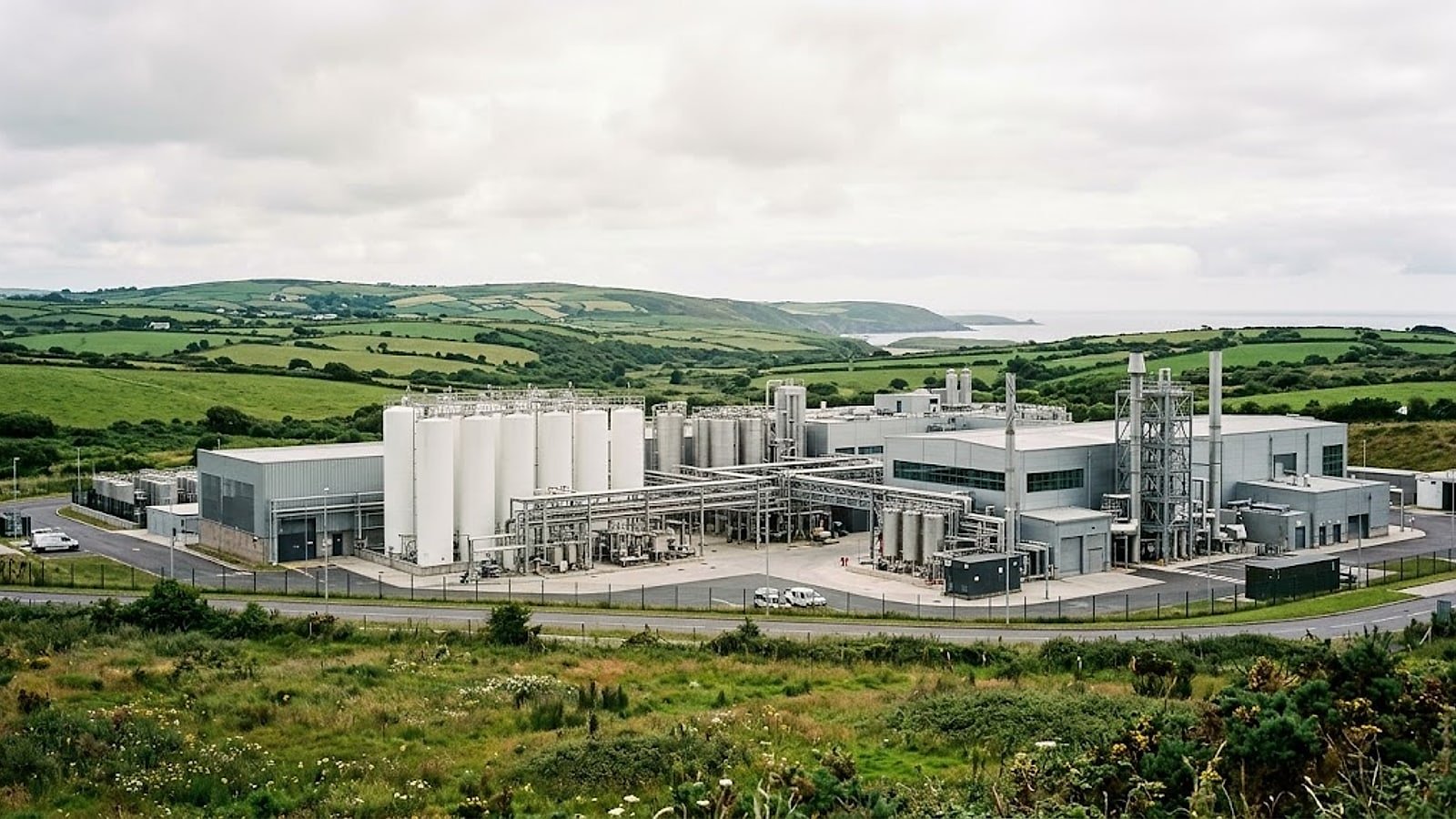
Cover image: AI-generated illustration.