
The HSE is not collecting all the medicine rebates that pharmaceutical companies owe it, according to an investigation by The Journal published on 23 October 2026. A 2025 internal audit found a "significant risk" of lost income, and invoices overdue by four months reached €54.1 million in August 2024.
The report by The Journal Investigates draws on internal HSE documents, including a June 2025 audit of how the Primary Care Reimbursement Service (PCRS) collects rebates and a memo from former HSE chief executive Bernard Gloster. Rebates were worth €480 million to the HSE in 2025, the report says. The total that has gone uncollected has not been disclosed, and The Journal says it cannot be calculated from the redacted documents it has seen.
- Audit finding: a June 2025 internal audit of PCRS rebate collection found a "significant risk" of loss of income to the HSE, according to The Journal.
- Overdue invoices: rebate invoices more than four months overdue rose from €30.3 million in December 2022 to €54.1 million in August 2024.
- Scale: rebates were worth €480 million in 2025, when the HSE spent €4.2 billion on drugs and recovered 11.5% through rebates.
- HSE position: outstanding rebate debt fell from 2.58% of related income at the end of 2025 to 1.6% at the end of August 2026, and all audit recommendations have been implemented.
- Agreement terms: under the 2026 to 2029 framework agreement with IPHA, the rebate on new medicines is 9% in 2026, falling to 5% by 2029.
- Not disclosed: the total amount uncollected and the names of the companies involved.
What the HSE internal audit found
According to The Journal, the June 2025 audit found "weaknesses" in the governance, risk management and controls around rebate collection. It covered rebates collected through the PCRS on medicines dispensed in the community. Medicines used in acute hospitals were outside its scope.
The auditors made four recommendations. One addressed "a significant risk of substantial financial loss, and/or accounting error", and the other three were rated as moderate risks. The report says the significant finding included a single rebate worth €405,000 where the quantity sold was supplied by the manufacturer rather than taken from community pharmacy claims, which the agreed system does not allow.
The audit also described a largely manual process. Rebates were calculated in Excel, invoice PDFs were uploaded to a finance system, and a different staff member later added the supporting documents. Disputes with suppliers often ended with new invoices issued for lower amounts, with no documented process for handling them. For newer and more expensive medicines, the auditors found no evidence that rebate calculations had been reviewed. All four recommendations were due to be completed by June 2026.
How much money is overdue
The clearest figures in the report concern overdue invoices. "Invoices overdue by four months rose from €30.3 million in December 2022 to €54.1 million in August 2024," The Journal reports, citing the audit. The HSE did not provide more recent overdue figures.
Instead, an HSE spokesperson said: "Outstanding rebate debt has reduced from 2.58% of related income at the end of 2025 to 1.6%" at the end of August 2026, "reflecting continued progress in collections and active debtor management." The Journal calculated that 2.58% of 2025 rebate income is about €12 million, and that 1.6% at 2025 income levels would be almost €7 million. The HSE said most balances date from this year and final figures will be confirmed at year-end.
| Measure | Figure |
|---|---|
| HSE drug spending, 2025 | €4.2 billion |
| Rebate income, 2025 | €480 million (11.5% of drug spending) |
| Invoices over four months overdue, December 2022 | €30.3 million |
| Invoices over four months overdue, August 2024 | €54.1 million |
| Outstanding rebate debt, end of 2025 | 2.58% of related income (about €12 million) |
| Outstanding rebate debt, end of August 2026 | 1.6% of related income (almost €7 million at 2025 levels) |
| Single rebate flagged by auditors | €405,000 |
| Total amount never collected | Not disclosed |
Why some suppliers are slow to pay
The Journal reports that five staff managed PCRS rebates at the time of the audit, and that chasing debtors was one of many tasks for the team. The HSE says recruitment is under way. The documents blame slow payment on "a number of multi-national suppliers" and on some suppliers that did not pay or engage with the PCRS. Frequent staff turnover at manufacturers also caused disputes, because HSE staff had to explain invoices and calculations again to new contacts.
The audit also noted "a small number of companies" that do not identify as members of the Irish Pharmaceutical Healthcare Association (IPHA) and consider that "national rebates do not apply to them." No company is named in the report, and the number of suppliers with unpaid balances has not been disclosed.
What Bernard Gloster told the Minister
Former HSE chief executive Bernard Gloster raised the problem in one of his last memos before handing over the role in March 2026. According to The Journal, he wrote in capital letters that it simply could not be the case that the HSE pays its own bills while failing to collect the income it is owed. "The Minister has asked for immediate attention to these matters," he added. The date of the memo has not been disclosed beyond that timing.
The memo comes at a time of financial pressure. The report notes that the HSE deficit is forecast to reach €1 billion by the end of the year. The Government's Budget 2027 allocation of €29.1 billion for health was announced earlier this month.
How medicine rebates work under the framework agreement
Ireland does not take most of its discount on branded medicines at the point of purchase. The HSE pays the full agreed price, then invoices each manufacturer for a percentage back. The terms are set in national framework agreements between the State and two industry groups: IPHA, which represents originator companies, and Medicines for Ireland (MFI), which represents generic, biosimilar and value-added medicine suppliers.
The current Framework Agreement on the Supply and Pricing of Medicines with IPHA runs from 1 January 2026 to 31 December 2029. Health Minister Jennifer Carroll MacNeill announced that the IPHA and MFI agreements had been finalised and signed in March 2026, replacing the 2021 versions. The audit period therefore fell under the 2021 IPHA agreement, under which the standard rebate rose in steps to 9% in 2025, according to a William Fry summary of that deal.
| Medicine group | Rebate to the HSE |
|---|---|
| On-patent new medicines added in 2026 | 9% |
| On-patent new medicines added in 2027 | 7% |
| On-patent new medicines added in 2028 | 6% |
| On-patent new medicines added in 2029 | 5% |
| Medicines added before January 2026 | 9% |
| Patent-expired biologics facing biosimilar competition | 12.5%, on top of a price cut |
The agreement says "Suppliers must discharge rebate payments in a timely fashion." Each month the HSE tells each supplier the quantity and value of its medicines reimbursed and the rebate due, which is then paid "in accordance with such terms as may be agreed between it and the HSE". A legal briefing by Arthur Cox notes that the agreement is expressly non-binding and provides for a midterm review in October 2027. For context on what other health systems pay before rebates, see our drug spending register.
How the HSE, Department and industry responded
The HSE told The Journal it has strengthened oversight, set up a working group, increased management focus on outstanding balances and continues to engage with suppliers. It says all audit recommendations have been implemented. In most disputed cases, it said, "suppliers accept that rebates are payable", and a 2026 settlement with one supplier "resulted in a significant rebate payment being made to the HSE."
A Department of Health spokesperson said: "The HSE recognises the importance of collecting all income due to the organisation." The Department described rebate collection as an operational matter for the HSE and said: "Effective income and rebate collection supports the delivery of health services and strengthens financial stewardship."
IPHA said it was "not in a position to comment" on the audit "as we were not advised or informed of the findings of this HSE audit report." It added: "The 2026 Agreement committed IPHA members to continuing their rebate contributions." MFI said it "recognises the importance of the timely implementation of the rebate arrangements", that individual settlements are commercial matters between companies and the PCRS, and that it has a twice-yearly review mechanism with the Government and the HSE.
Ronan Mahon, chair of the Health Economics Association of Ireland, questioned the rebate model itself, telling The Journal that companies "would want to keep their list prices very high because that might be a reference price for the US, in particular". He said: "There's virtue in simplicity. Arguably, we're better off without a rebate and just getting better net prices." Dr Suzanne Crowe, a consultant in paediatric intensive care, said: "It absolutely behoves the system to make sure that we're actually getting good value for money."
Frequently Asked Questions (FAQ)
Q: What are HSE medicine rebates?
A: They are payments from pharmaceutical suppliers back to the HSE. The HSE pays the agreed price for a medicine and then invoices the supplier for a set percentage of the value reimbursed, under national framework agreements with IPHA and Medicines for Ireland.
Q: How much do pharma companies owe the HSE?
A: The total uncollected amount has not been disclosed. The 2025 audit recorded €54.1 million in invoices more than four months overdue in August 2024. The HSE says outstanding rebate debt was 1.6% of related income at the end of August 2026.
Q: Which companies have not paid?
A: No companies are named in the report. The documents refer to "a number of multi-national suppliers" and to a small number of non-IPHA companies that consider national rebates do not apply to them.
Q: What rebate rate applies in 2026?
A: Under the 2026 to 2029 IPHA agreement, on-patent new medicines added in 2026 carry a 9% rebate, falling to 7%, 6% and 5% for medicines added in later years. Medicines added before January 2026 carry 9%.
Q: Has the HSE fixed the problems?
A: The HSE says all four audit recommendations have been implemented, a working group is in place and recruitment for the rebates team is under way. Final 2026 figures will be confirmed at year-end.
Conclusion and Outlook
The report puts a familiar weakness in the Irish medicines system on the record: a rebate model worth hundreds of millions of euro a year relies on a small team, spreadsheets and supplier cooperation. The HSE says collections are improving, and its 1.6% figure suggests a smaller backlog than in 2024. The real test will be the year-end accounts and whether the HSE publishes audited figures for rebates billed, collected and written off. The October 2027 midterm review of the framework agreement is the next formal point at which the rebate system itself could change. Priya Life Science will report on any further disclosures.
Sources
- The Journal Investigates, HSE failing to collect millions of euro owed by pharma companies, 23 October 2026
- IPHA, The Framework Agreement on the Supply and Pricing of Medicines (FASPM) 2026-2029, 3 March 2026
- Department of Health, Minister announces Framework Agreements on the Supply and Pricing of Medicines with Medicines for Ireland and the Irish Pharmaceutical Healthcare Association, March 2026
- Arthur Cox, Pricing and reimbursement of medicines in Ireland: New Framework Agreement 2026-2029 published, 23 March 2026
- William Fry, New medicines supply agreement confirmed by IPHA
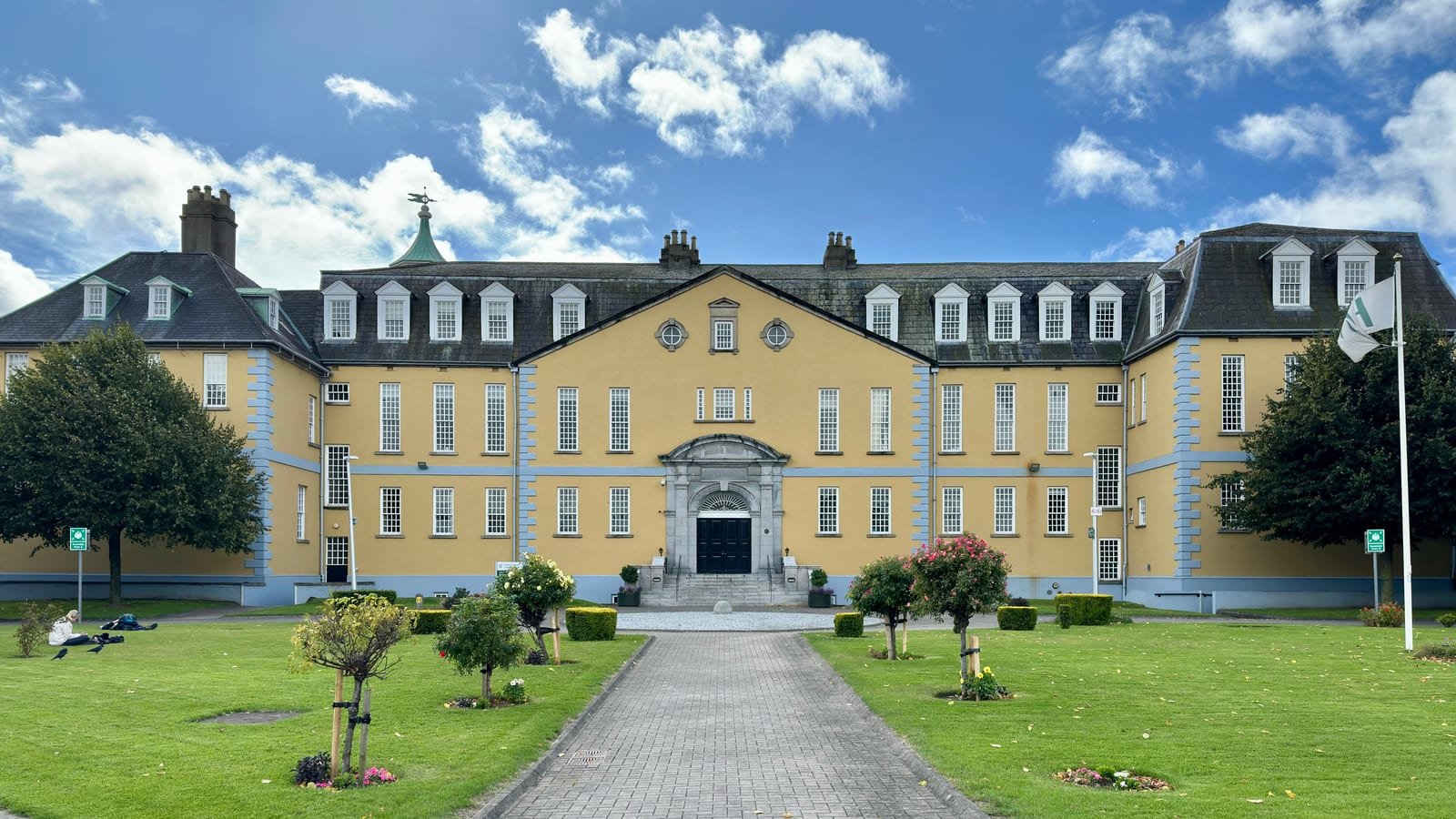
Cover image: Miesian Plaza on Baggot Street, Dublin, home of the Department of Health. Photo by Schafphoto, Wikimedia Commons, licensed under CC BY 4.0, cropped.