
Irish Medtech has called for EU medical device regulatory reform that protects patients and restores European competitiveness, as about 300 delegates gathered at Global Access 2026 in Galway on 21 and 22 October. The Ibec group backs the European Commission's proposal to revise the MDR and IVDR, but warns against diluting it.
The call came in an Ibec press release published on 21 October 2026, the opening day of the conference at The Galmont hotel. Irish Medtech, which the release describes as "the Ibec group representing the medtech sector", organises the event, which is an "associated event of the Irish Presidency of the Council of the EU 2026". According to the release, the conference "will welcome 300 delegates and 60 speakers".
- Event: Global Access 2026, Irish Medtech's quality assurance and regulatory affairs conference, at The Galmont, Galway, on 21 and 22 October 2026.
- Scale: 300 delegates and 60 speakers, according to Ibec.
- Main message: Irish Medtech supports the Commission's proposal to reform the Medical Device Regulation (MDR) and In Vitro Diagnostic Regulation (IVDR) but warns against dilution.
- Market share: Ibec says Europe's share of the world medtech market fell from 28% to 25.6% in ten years, while the US share rose from 40% to 46.4%.
- Speakers listed: include Minister Hildegarde Naughton TD and Olivér Várhelyi, EU Commissioner for Health and Animal Welfare.
- EU context: the Commission proposed simplified medical device rules on 16 December 2025 and estimates savings of €3.3 billion a year.
What Irish Medtech said in Galway
Irish Medtech Director Eoghan Ó Faoláin used the opening of the conference to describe a fast-changing global environment for device makers. "The international regulatory landscape is seeing tectonic shifts with advances in technology like AI," he said, pointing also to "rising markets like Japan, and new business practices".
He said "the European medtech sector is renowned for its constant innovation", citing more than 15,905 patent applications filed with the European Patent Office in 2025. The release adds that recent years have seen "lower volumes of medtech patents when compared to computer technology, digital communications, and electrical machinery", and links this trend to the regulations, saying "it also points to the consequences of the EU Medical Device and IVD regulations."
Irish Medtech Senior Executive Dr Emer Sherry set out the scale of the sector at European level. "There are 38,000 medtech companies in Europe, of which 90% are SMEs, and 800,000 people are employed," she said. She added that "in the past ten years the European market share has shrunk from 28% of the world market to 25.6%", while the US share has grown from 40% to 46.4%.
Why the group backs the Commission proposal but fears dilution
Dr Sherry said the Commission's proposal to reform the medical device and IVD regulations is "a critical step forward". Alongside that support, Irish Medtech's message in the release is to "warn against dilution which risks missing a long overdue opportunity to address the structural challenges." The release does not set out a numbered list of amendments; its position is to support the proposal, resist any weakening of it during negotiations, and use the Irish Presidency to make progress.
On that last point, Dr Sherry said "the Irish Presidency of EU Council is an opportunity to move negotiations forward, build consensus" on the reform. The release frames this as important "given Ireland's position as a global medtech hub".
The Galway message follows the line Irish Medtech took when the proposal was first published. In an 18 December 2025 statement, the group welcomed the "targeted revision proposal", which it said included pathways for breakthrough innovations and orphan devices, an extension of certificate validity and more scope for digitalisation. Dr Sherry said then that "this is just the beginning and further stakeholder dialogue is required."
What the European Commission has proposed for medical devices
The Commission published its plan on 16 December 2025 as part of a health package that also included a Biotech Act and a Safe Hearts Plan. It said the EU medical device sector "employs close to one million people, mostly in small and medium-sized enterprises", and that the EU market is worth around €170 billion. It also said "current EU rules are creating unnecessary costs, bottlenecks, uncertainty for companies, and delays for patients."
According to the Commission, the proposal would:
- introduce timelines for completing conformity assessments, to speed up access to devices and protect supply;
- give the European Medicines Agency (EMA) a stronger coordinating role, including monitoring device shortages and keeping a list of critical devices;
- support the digitalisation of procedures;
- set uniform and coherent rules for medical devices that incorporate AI.
The Commission estimates overall savings of €3.3 billion per year, including €2.4 billion in annual administrative savings. The proposals were sent to the European Parliament and the Council for adoption, which is why industry groups see the current Irish Council Presidency as an important window.
Europe and Ireland medtech figures in context
The table brings together the figures cited by Irish Medtech in Galway and by the Commission and Ibec elsewhere. Figures from different sources cover different scopes and years and should not be added together.
| Measure | Figure and source |
|---|---|
| Medtech companies in Europe | 38,000, of which 90% are SMEs (Irish Medtech, Galway) |
| People employed in European medtech | 800,000 (Irish Medtech); close to one million (European Commission) |
| Europe's share of world medtech market | Down from 28% to 25.6% in ten years (Irish Medtech) |
| US share of world medtech market | Up from 40% to 46.4% in the same period (Irish Medtech) |
| EU medical device market value | Around €170 billion (European Commission) |
| Estimated savings from the reform | €3.3 billion a year, including €2.4 billion administrative (European Commission) |
| Medtech companies in Ireland | 450 (Ibec Irish Medtech priorities page) |
| Irish medtech exports | €16 billion (Ibec Irish Medtech priorities page) |
| People employed in Irish medtech | More than 48,000 (Ibec Irish Medtech priorities page) |
The Irish figures come from Irish Medtech's published priorities, which list reform of the EU medical device and in vitro diagnostic regulatory system as a top policy ask. That page does not state the year the figures refer to, and the Galway release itself gives no Irish employment or export figures.
Who is speaking at Global Access 2026
The release says "speakers include" Minister Hildegarde Naughton TD and Olivér Várhelyi, EU Commissioner for Health and Animal Welfare. Industry and regulatory speakers named in the release are Roz Burke, Senior Vice President, Global Quality and Regulatory at Boston Scientific; Roland Black, Director Regulatory Affairs EMEA at Abbott; Paul Devereux, Senior Engineering Director, Surgical Ireland at Medtronic; Dr Lucia Prihodova, Programme Manager at the National Office for Research Ethics Committees (NREC); and Dhanashree Gokhale, Digital Health Lead at the Health Products Regulatory Authority (HPRA).
Ibec says the programme covers future-proofing European competitiveness, access to the US market, clinical investigations, what digital health means for regulation, and environmental regulation. The conference website also lists sessions on engagement with notified bodies and authorities and on AI, data and cyber security in quality and regulatory work. Stryker is the platinum sponsor.
The conference is one of several Irish EU Presidency events on health policy this autumn, following the European Health Data Space conference at Croke Park. Irish Medtech's skills work on AI is covered in our report on its GenAI roadmap.
Frequently Asked Questions (FAQ)
Q: What is Global Access 2026?
A: It is Irish Medtech's medtech quality assurance and regulatory affairs conference, held at The Galmont, Galway, on 21 and 22 October 2026. Ibec says it has 300 delegates and 60 speakers and is an associated event of the Irish Presidency of the Council of the EU.
Q: What are the MDR and IVDR?
A: The Medical Device Regulation (EU) 2017/745 and the In Vitro Diagnostic Regulation (EU) 2017/746 are the EU laws that govern how medical devices and diagnostic tests are certified and placed on the market.
Q: What did the European Commission propose in December 2025?
A: On 16 December 2025 it proposed simpler rules, including timelines for conformity assessments, a stronger role for the EMA on coordination and shortages, a list of critical devices, more digital procedures and uniform rules for AI-enabled devices. It estimates savings of €3.3 billion a year.
Q: What does Irish Medtech want?
A: It supports the Commission's proposal, calls it a critical step forward, and warns against diluting it during negotiations. It wants the Irish Presidency to move talks forward and build consensus.
Q: Is the reform law yet?
A: No. The Commission sent the proposals to the European Parliament and the Council for adoption. A final text and dates for application have not been disclosed.
Conclusion and Outlook
Global Access 2026 gave Irish Medtech a platform to press its case while Ireland holds the Council Presidency, the period in which member states can shape their position on the MDR and IVDR revision. The group's message is consistent with its December 2025 response: the Commission's proposal is welcome, but industry wants the structural fixes kept intact. The next milestones are the Council and European Parliament positions on the proposal. Their timing has not been disclosed, and Priya Life Science will report on any agreed text.
Sources
- Ibec, Medtech leaders gather in Galway calling for regulatory reform that protects patients and EU competitiveness, 21 October 2026
- Ibec, Irish Medtech hails EU Commission's revision proposal, 18 December 2025
- European Commission, New measures to make EU health sector more innovative, competitive and resilient (IP/25/3077), 16 December 2025
- Ibec, Irish Medtech priorities
- Irish Medtech, Global Access 2026 conference website
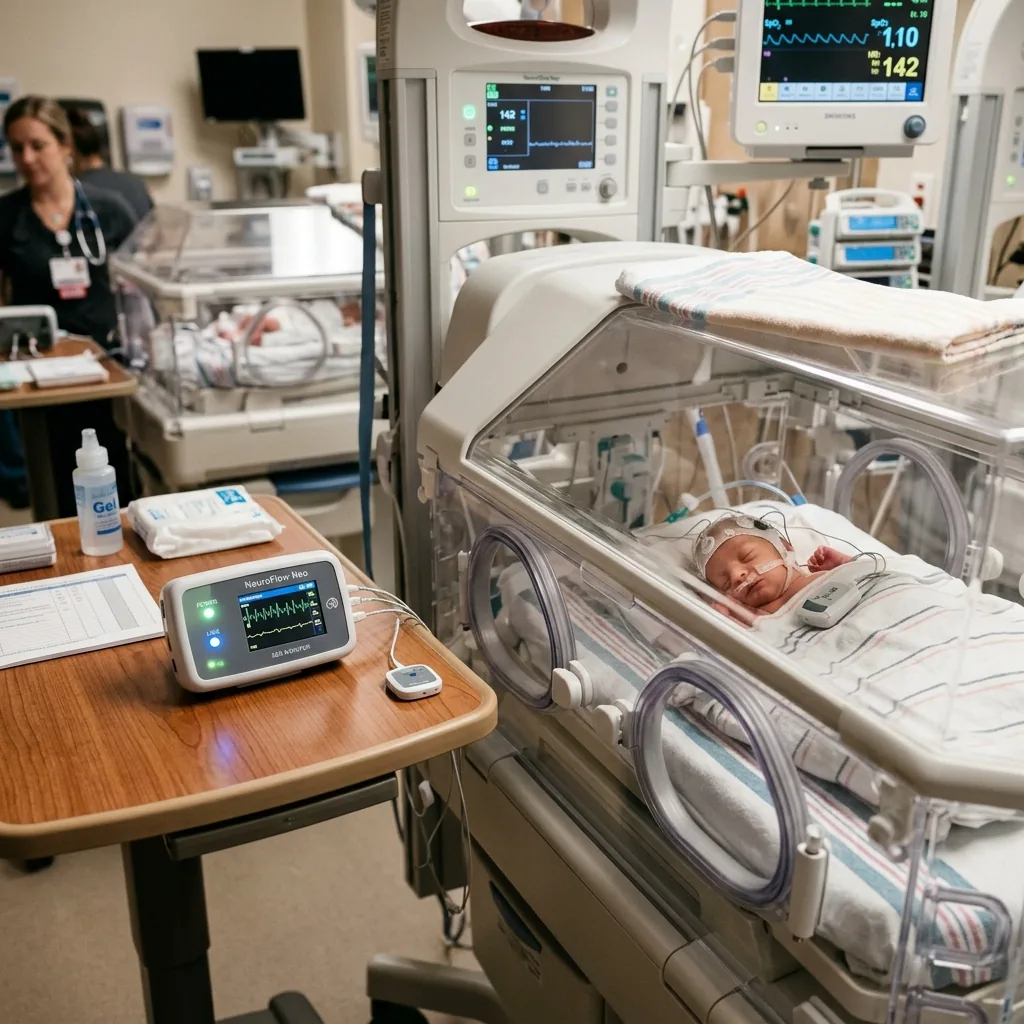
Cover image: AI-generated illustration of a medical device inspection, not a photograph of a specific company, person or site.