
Irish Medtech, Irish Medtech Skillnet and lead author Brightbeam launched "Generative AI for Medtech: The 2027 Playbook" on 7 October 2026. It maps 92 GenAI use cases and 28 deep dives across six value streams. It matters because it gives Ireland's regulated device makers a shared starting point for moving from AI experiments to controlled adoption.
The launch was announced in an Ibec press release. The document is free to download after registering on the Irish Medtech Skillnet Talent to Thrive site, and a free printed copy can be ordered for any EU address through Brightbeam. We did not register to download the PDF, so this analysis is based on the press release and launch materials. Where those are silent, we say so.
- What: "Generative AI for Medtech: The 2027 Playbook" (v1.0), from Irish Medtech Skillnet and Irish Medtech (part of Ibec), with Brightbeam as lead author.
- Scope: 92 use cases and 28 deep dives across Quality & Compliance, Manufacturing, Regulation & Sustainability, Supply Chain, Business Processes and Clinical Data.
- Evidence base: 97 professionals from six medtech companies, which are not named publicly.
- Headline claim: a 20% to 40% "estimated" share of engineers' and scientists' time on manual data work, with no source given.
- Our addition: a PLS proof-of-concept evaluation log (section 6), built on official criteria, not taken from the playbook.
1. What was launched
The press release describes "a new industry-led roadmap designed to help Ireland's medical technology sector move from AI experimentation to practical, responsible adoption across highly regulated operations." Irish Medtech Skillnet is co-funded by Skillnet Ireland and its network companies, with Skillnet Ireland funded from the National Training Fund and the EU.
The landing page sets out the evidence base: "Six Medtech companies contributed almost 100 professionals across 20 hours of guided discovery interviews and six workshops, from which 92 use cases were assessed and 28 deep dives conducted, each prioritised by the participants themselves." Brightbeam gives the exact figure as 97.
The release names three "critical factors": "eliminating administrative drag; protecting organisations against the loss of tacit knowledge; and using the Medtech sector's rigorous regulatory and compliance frameworks to underpin safe and transparent AI deployment." It closes with four actions for executives: "target high-cost value streams; appoint an executive sponsor with cross-functional authority; invest in measurable pilot projects; and prioritise workforce capability so employees can use AI effectively, challenge its outputs and retain appropriate human governance."
The launch took place at Ibec, 84/86 Baggot Street, Dublin. According to Brightbeam, its CEO Brian Hanly chaired a panel with colleagues from West Pharma, Alcon, Meissner and Medtronic. Those firms were panellists; no public source confirms that they are among the six contributors.
2. What is public, and what is not
| Item | Public in launch materials? |
|---|---|
| Use case and deep-dive counts; six value streams | Yes (Ibec release) |
| Section structure | In outline: overviews, high-impact opportunities and "practical conditions for success" |
| Names of the four adoption stages | Not clear; the release text describing them is garbled |
| The 92 use cases and 28 deep-dive titles | Not published outside the PDF |
| Contributing companies | Not named |
| Source of the 20% to 40% figure | Not given |
| Pilot method, KPIs, evaluation criteria | Not published; the release says only "invest in measurable pilot projects" |
Brightbeam's launch post mentions "planning production, assessing how regulatory changes affect procedures, analysing how devices perform in clinical use, and more", and says the deep dives "cover the data, validation and controls each application needs". Beyond that, we attribute no specific use case to the playbook.
3. Strengths of the initiative
Practitioner-led. Nearly 100 people inside working medtech companies shaped and ranked the use cases, which should make the priorities recognisable to quality, manufacturing and regulatory teams.
Governance first. The release is explicit: "AI can support search, data extraction, pattern synthesis and initial document drafting, but qualified subject-matter experts must retain full visibility and accountability." Outputs affecting quality, regulatory or manufacturing records "should continue to be filtered through established Quality Management Systems". That is the right instinct for a sector whose records are inspected.
Knowledge, not replacement. Brian Hanly said: "Much of the knowledge needed to improve performance already exists within each site, but it is scattered across systems, documents and individual experience. Expressed simply, the opportunity with AI is to bring that knowledge to the point of the decision, every time."
Free and tied to skills. Irish Medtech Skillnet is aligning its MSc programmes in Medical Technology Regulatory Affairs and Digitalisation of Manufacturing, plus postgraduate certificates, including a new Level 9 certificate that will incorporate AI and data analytics.
Learning from a predecessor. Brightbeam also led the 2025 "Generative AI for Life Sciences Playbook" with BioPharmaChem Ireland. At that launch Hanly said many companies were stuck in "proof-of-concept purgatory". The medtech edition's call for measurable pilots reads as a response.
4. Gaps and open questions
The headline number is unsourced. The 20% to 40% "bandwidth" estimate for manual data retrieval, documentation formatting and administrative reconciliation is labelled an estimate, with no method or sample. It may come from the playbook's interviews; that cannot be checked publicly. Companies should measure their own baseline instead.
Anonymous contributors. Without the six names, readers cannot judge how representative the findings are for smaller firms. Irish Medtech's own August 2026 figures say 80% of the sector's companies, in volume terms, are startups or SMEs.
No visible evaluation method. The public materials do not say what to measure, how to set acceptance criteria or when to stop a pilot.
A commercial lead author. Brightbeam is an AI consultancy. That does not undermine the work, but readers should note it.
No published proof. We found no named Irish medtech GenAI pilot with a published result, and no independent media coverage of the launch as of 13 October 2026.
5. The regulatory frame a medtech GenAI pilot must respect
Most early pilots are internal tools for drafting, search or summarisation. They are usually not medical devices, but they sit inside regulated processes. The AI Act timeline was changed by the Digital Omnibus on AI, Regulation (EU) 2026/1744.
| Framework | Status / key date | Relevance to a GenAI pilot |
|---|---|---|
| EU AI Act, Reg. (EU) 2024/1689 | Prohibitions 2 Feb 2025; general-purpose AI 2 Aug 2025; Art. 50 transparency 2 Aug 2026 | Literacy and transparency duties apply to deployers now |
| Digital Omnibus on AI, Reg. (EU) 2026/1744 | Adopted 8 Jul 2026; Official Journal 24 Jul 2026; in force 27 Jul 2026 | Moves the high-risk dates below |
| High-risk AI, Annex I products (incl. MDR/IVDR devices needing a notified body) | 2 August 2028 (was 2 Aug 2027) | AI that is a device or safety component; an internal drafting tool usually is not |
| High-risk AI, Annex III | 2 December 2027 (was 2 Aug 2026) | For example, AI in HR decisions |
| Art. 50(2) synthetic-content marking | By 2 December 2026 for systems on the market before 2 Aug 2026 | GenAI output marking |
| EU GMP Annex 22 (AI) | Draft only; consultation closed 7 Oct 2025; not on the EudraLex page as of 13 Oct 2026 | Covers medicines, not devices; relevant to combination products |
| ISO 13485:2016 | Current; reported unchanged until April 2030 (TÜV NORD) | Clause 4.1.6 software validation for tools used in the QMS |
| FDA QMSR (21 CFR 820) | Effective 2 February 2026 | US sites: QMS software must comply |
| FDA Computer Software Assurance guidance | Final; re-issued February 2026 as "...Production and Quality Management System Software" | Risk-based assurance for internal tools |
Devices stay in scope. A December 2025 Commission proposal would have moved MDR and IVDR into Section B of AI Act Annex I, largely outside the Act. According to law firm Gleiss Lutz, the provisional AI Omnibus deal of 7 May 2026 states that "the MDR and IVDR shall not be moved from Section A to Section B of Annex I". The broader MDR/IVDR revision had no adopted text at the time of writing.
Draft Annex 22 on GenAI. The consultation draft says it "does not apply to Generative AI and Large Language Models (LLM), and such models should not be used in critical GMP applications." In non-critical uses, "personnel with adequate qualification and training should always be responsible for ensuring that the outputs from such models are suitable for the intended use, i.e. a human-in-the-loop (HITL)". That matches the playbook's stated principle, though the annex is a draft and covers medicines.
6. A practical POC evaluation log (PLS template)
The public materials include no pilot evaluation method, so we built one. This log is Priya Life Science's own template, not taken from or endorsed by the playbook or its authors. It draws on draft EU GMP Annex 22 acceptance-testing principles (intended use approved by a subject-matter expert, acceptance criteria set before testing, independent test data, no decrease against the current process, human-in-the-loop responsibility), FDA's risk-based Computer Software Assurance and ISO 13485 software validation, with outputs routed through the QMS. All example entries are illustrative, not real results.
| Field | What to record | Example entry |
|---|---|---|
| 1. ID, owner, sponsor | Pilot ID, business owner, executive sponsor, QA contact | Example: POC-QA-01; owner: QA manager |
| 2. Intended use | What the tool does, on which inputs, and what it must not do; approved by an SME before testing | Example: "Drafts a summary for a reviewer; never edits a controlled record." |
| 3. Criticality | Could output affect patient safety, product quality or data integrity? GenAI only in non-critical uses | Example: Non-critical; reviewer writes the record |
| 4. Regulatory determination | Device or not; AI Act category; QMSR scope; who signed the rationale | Example: Internal QMS tool, not a device |
| 5. Tool and version | Product, model version, hosting, prompt version, frozen for testing | Example: [tool], [model/version], prompt v0.3 |
| 6. Data and access | Sources the tool reads, confidentiality and personal-data check | Example: Read-only copy; no personal data |
| 7. Test set | Range of real inputs and subgroups; independent of prompt-writing material | Example: [n] past documents, [x] formats |
| 8. Baseline | Time and error rate of today's process, measured on your site | Example: [x] minutes per document |
| 9. Acceptance criteria | Thresholds, including no decrease against baseline, signed before the first run | Example: Zero unflagged critical omissions |
| 10. Metrics and results | Task-suited metrics (for example precision, sensitivity, F1, reviewer edit rate) per subgroup | Example: [subgroup] below threshold |
| 11. Repeatability | Same inputs run more than once; how much outputs vary | Example: Wording varied; values identical |
| 12. Human in the loop | Reviewer role, training, what they check, how output enters the QMS | Example: QA specialist checks every summary against source |
| 13. Errors | Every wrong, invented or missing output, severity, whether caught | Example: [n] errors, all caught at review |
| 14. Decision and sign-off | Stop, extend or move to validated use; signatures of owner, SME and QA | Example: Extend; not approved for routine use |
Three rules make the log work. Fill fields 2, 8 and 9 before any test, so the pilot is not judged against goals chosen afterwards. Keep the tool and prompt frozen; any change starts a new run. Treat a pilot that touches a controlled record as a QMS process change and route it through change control.
7. The Irish context and supports
The release says Ireland's medtech sector "employs more than 50,000 people, exports €20 billion annually, and is home to 14 of the world's top 15 Medtech multinationals", and warns that staying competitive "will require a significant step-change in digital productivity". In its Budget 2027 statement, Irish Medtech asked the Government to scale Skillnet Business Networks for "the AI-driven future", at an estimated €16.7 million in 2027.
The Government's "Digital Ireland" National Digital and AI Strategy (February 2026) includes a sectoral AI adoption strategy, an AI literacy campaign for SMEs and a new AI Office of Ireland. For a first pilot, the Department of Enterprise, Tourism and Employment lists the Grow Digital Voucher (up to €5,000, 50% funding), Enterprise Ireland's Digital Discovery Grant (up to 80% of costs, maximum €5,000) and European Digital Innovation Hubs offering hands-on AI trials.
8. Frequently Asked Questions (FAQ)
Q: Who published Generative AI for Medtech: The 2027 Playbook?
A: Irish Medtech Skillnet and Irish Medtech, part of Ibec, with Brightbeam as lead author, on 7 October 2026.
Q: Is it free?
A: Yes. It downloads free after registration on the Talent to Thrive site, and Brightbeam posts free printed copies to EU addresses.
Q: Where does the 20% to 40% time figure come from?
A: The press release calls it an estimate and gives no source or method.
Q: Does the EU AI Act treat an internal GenAI drafting tool as high-risk?
A: Usually not. Device high-risk rules target AI that is a device or safety component, from 2 August 2028. Transparency and AI literacy duties already apply, and quality system rules cover any tool used in QMS processes.
Q: Is the POC evaluation log part of the playbook?
A: No. It is Priya Life Science's own template, built on draft Annex 22, FDA Computer Software Assurance and ISO 13485 principles.
Conclusion and Outlook
The 2027 playbook is useful sector infrastructure: practitioner-led, free, governance-first and linked to accredited training. Its public evidence is thin, though: the headline estimate is unsourced, the contributors are unnamed and the pilot method is not visible outside the PDF. Companies should treat it as a map of where to look, then prove value on their own data with pre-set acceptance criteria and a named reviewer. With Annex 22 still in draft and AI Act device dates now in August 2028, 2027 is a sensible window for disciplined pilots. We will update this analysis once we have reviewed the full document.
Sources: Ibec press release (7 October 2026); Irish Medtech Skillnet Talent to Thrive page and Brightbeam order page (checked 13 October 2026); Brightbeam launch posts (6 and 7 October 2026); Ibec release on the 2025 Life Sciences Playbook (26 September 2025); Irish Medtech Budget 2027 release (19 August 2026); European Commission Annex 22 consultation draft (2025) and EudraLex Volume 4 page (checked 13 October 2026); Regulation (EU) 2026/1744 per the NI Assembly EU-acts register and brubru.beresol.eu analysis; Gleiss Lutz (30 December 2025, updated 7 May 2026); FDA QMSR page and Computer Software Assurance guidance (February 2026); TÜV NORD on ISO 13485:2016; Department of the Taoiseach, Digital Ireland (18 February 2026); DETE AI and digital supports page (27 May 2026). This article is for information only and is not legal or regulatory advice.
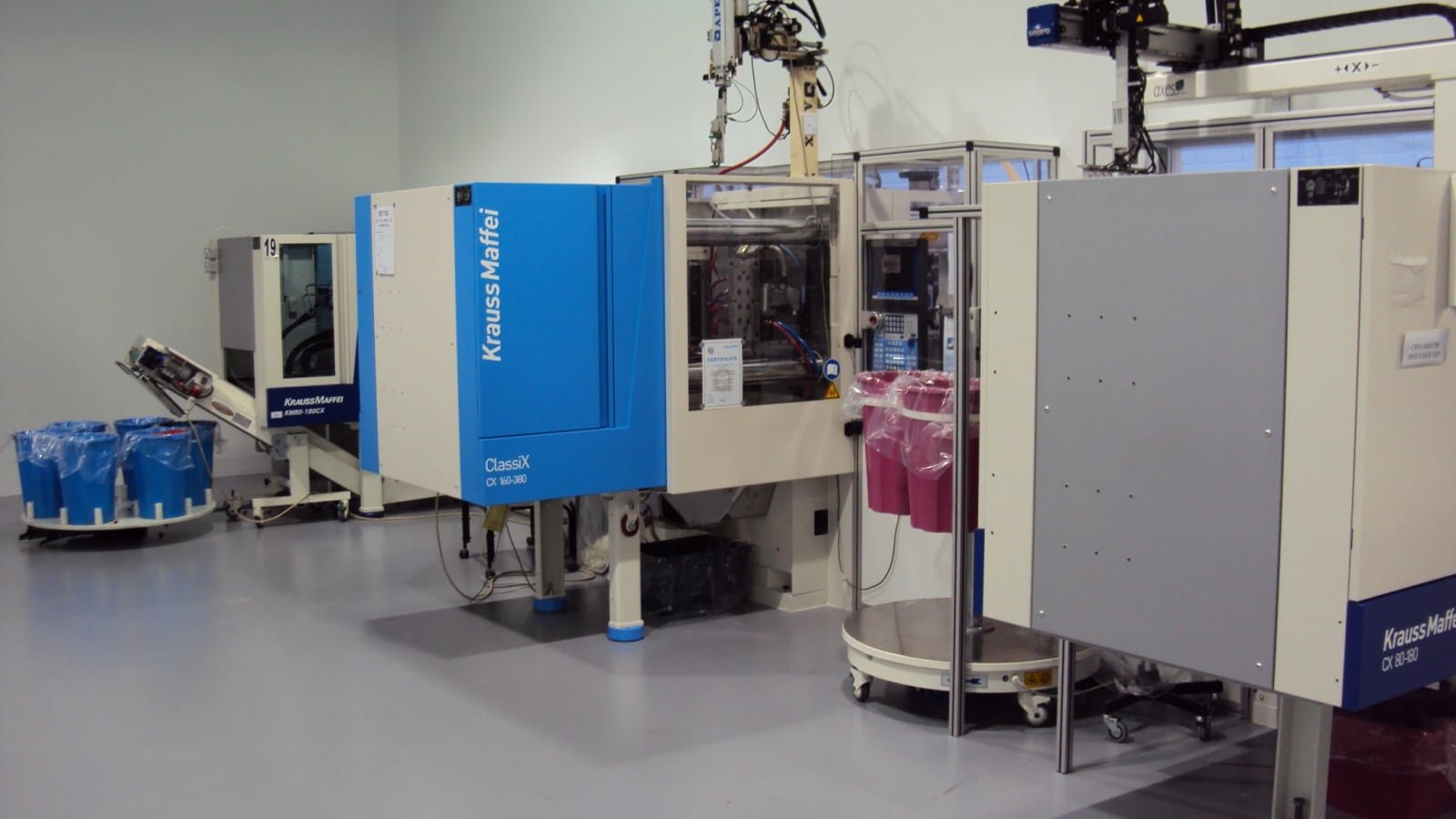
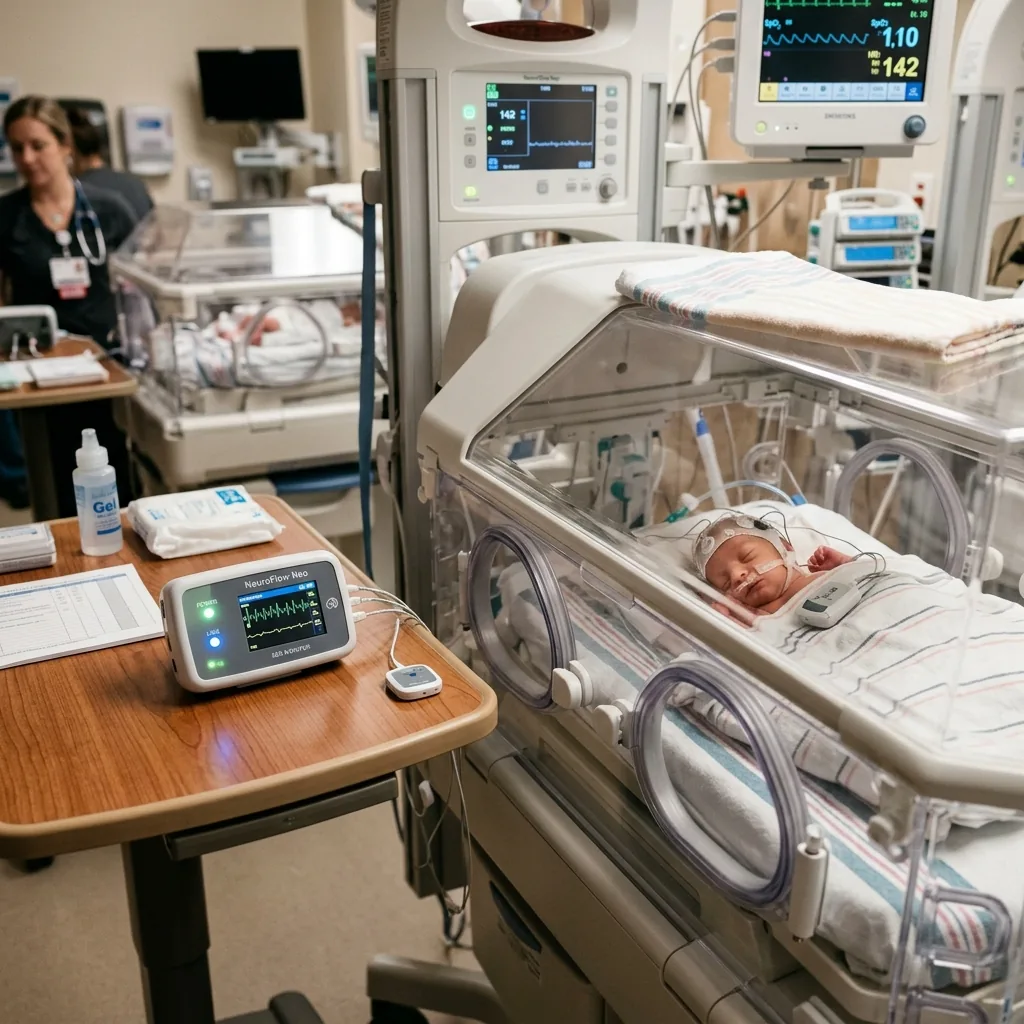
Cover image: AI-generated illustration of a medtech cleanroom; it does not show any real company.