
A HSE expert group is meeting this week to decide whether Mounjaro (tirzepatide), Eli Lilly's weekly weight-loss injection, should be publicly funded in Ireland. The National Centre for Pharmacoeconomics found it was not value for money at its list price, but Lilly has since offered what the NCPE called a "significant" price reduction.
The final decision rests with HSE management after it hears the expert group's evidence, according to reports by RTÉ News and TheJournal.ie on 11 October 2026. Today Mounjaro is available in Ireland on prescription, but it is not reimbursed for weight management by the HSE, the Medical Card (GMS) scheme or the Drugs Payment Scheme, so only people who can pay for it privately are using it.
- Decision pending: a HSE expert group is considering free or reduced-cost access to tirzepatide for weight management; HSE management makes the final call.
- NCPE verdict (December 2025): "considered for reimbursement if cost-effectiveness can be improved relative to existing treatments" (HTA ID 24024).
- Scale: the NCPE-adjusted five-year net drug-budget impact was €5.23 billion (including VAT) for the full licensed population.
- Price offer: Lilly engaged with Irish authorities on pricing; in June the NCPE's Prof Michael Barry described the reduction as "significant" (RTÉ).
- Eligibility: Prof Donal O'Shea estimates more than a million people could be eligible, at a cost of €2 billion to €3 billion or more.
1. What the HSE is deciding
The question in front of the expert group is narrow but expensive: should people living with obesity be able to get tirzepatide free or at reduced cost, based on its clinical benefits? Lilly's application covers weight management. A separate NCPE assessment for type 2 diabetes (HTA ID 24003, published January 2026) reached a similar conclusion, recommending that the HSE consider funding if its value for money can be improved.
Reports differ on the day of the meeting: TheJournal.ie said Monday 12 October, RTÉ said Tuesday 13 October. Both agree that HSE management will decide after the evidence is heard. No outcome had been reported at the time of writing.
2. Why the NCPE said no at the list price
The NCPE plain English summary is direct: the medicine "may work as well or better than other ways to manage this condition", but "the price of the medicine is too high". Its technical summary gives the numbers behind that verdict.
| NCPE figure (HTA ID 24024) | Value |
|---|---|
| Price to wholesaler per pack | €324.37 (2.5mg), €337.22 (5mg), €365.31 (7.5mg to 15mg) |
| Cost per patient per year to the HSE | €5,526 to €6,214 |
| Lilly's own cost per QALY vs diet and exercise | €67,593 (15mg) to €82,655 (5mg) |
| Irish thresholds | €20,000 and €45,000 per QALY |
| Price cut needed (5mg, NCPE base case) | About 67% to reach €45,000/QALY; 90.5% to reach €20,000/QALY |
| Five-year net drug-budget impact, Lilly | €858.7 million (full licence) to €87.9 million (BMI 35+ with a weight-related condition) |
| Five-year net drug-budget impact, NCPE-adjusted | €5.23 billion (full licence), €1.44 billion (BMI 35+), €1.25 billion (BMI 40+), all including VAT |
The NCPE called the budget impact for all eligible patients "extremely large, and unprecedented in terms of previously reimbursed pharmacological treatments in Ireland". It also noted that cost-effectiveness is strongest in patients with the highest BMI, and that long-term savings elsewhere in the health service are "likely", but uncertain in size.
When the assessment was published, Prof Michael Barry, clinical director of the NCPE, told the Irish Examiner (4 December 2025) that the drug was "not too far away" from being cost-effective. On the clinical side he said: "One trial showed patients can expect to lose on average about 20kg over the 72-week period, and that is maintained." He estimated that up to 900,000 people could qualify at a BMI over 30, and about 80,000 at a BMI over 40.
3. The case for funding: "transformative"
Prof Donal O'Shea, clinical lead of the HSE's National Obesity Programme, told RTÉ Radio One's This Week that a positive decision would be "transformative", and that the spending would be "massively well spent". He pointed to benefits beyond weight: lower blood pressure, less insulin resistance and a lower likelihood of diabetes and cancer. He also said wider access would reduce health inequality, because at present only people who can afford it are taking the drug.
His argument rests on savings the health service does not book. "You never see the saved money in the health service," he said, citing a hip replacement or a case of diabetes that never happens. He also named groups he believes could benefit, including people with Down syndrome, for whom obesity may be a significant risk factor for dementia.
Prof Carel le Roux of UCD told RTÉ that the drug shifts the focus "away from weight loss to health gain", citing reductions in diabetes risk and blood pressure, and randomised trial evidence of reduced heart attack risk. RTÉ noted that he has previously done consultancy work for Eli Lilly.
4. Who would qualify: the BMI options
The licensed indication, set out by the NCPE, covers adults with a BMI of 30 or more, or a BMI of 27 to 30 with at least one weight-related condition such as diabetes, high blood fats, high blood pressure or obstructive sleep apnoea. Funding all of them is what drives the multi-billion-euro estimates. Prof O'Shea outlined two options: prescribing for everyone with a BMI over 30, or, his preference, for people with a BMI of 27 or more who also have conditions such as hypertension, cardiovascular disease, pre-diabetes or type 2 diabetes, decided case by case. He also cautioned that BMI can be a poor measure of an individual's health, and that rapid weight loss can bring risks such as frailty and falls.
The HSE currently funds one weight-loss medicine for public patients, Saxenda (liraglutide), under a managed access protocol. Any tirzepatide decision is likely to use a similar targeted route rather than open access.
5. Why it matters for Irish pharma
Mounjaro was first authorised in the EU on 15 September 2022; the marketing authorisation holder is Eli Lilly Nederland B.V. (EMA). It acts on both the GIP and GLP-1 receptors. The Irish Examiner reported that the drug's key ingredient is made at Lilly's plant in Kinsale, Co Cork, and Lilly continues to invest in Ireland, including its Limerick biologics facility.
The decision is also a test of how the HSE handles high-volume chronic-disease medicines, where the cost per patient is moderate but the eligible population is very large. The State has signalled some movement on obesity care: Minister of State Jennifer Murnane O'Connor announced €2.4 million in Budget 2027 and additional posts for obesity services, RTÉ reported. For background on the wider debate, see our earlier analysis, The GLP-1 Dilemma: Ireland's Battle Over Blockbuster Weight-Loss Drugs.
6. Frequently Asked Questions (FAQ)
Q: Is Mounjaro free on the medical card in Ireland?
A: Not for weight management. It is available on prescription, but the HSE, the GMS scheme and the Drugs Payment Scheme do not reimburse it for that use. A HSE expert group is now considering funding.
Q: Who decides whether the HSE funds Mounjaro?
A: HSE management makes the final decision after the expert group reviews the evidence. The NCPE advises on value for money, and the HSE also weighs the criteria in the Health (Pricing and Supply of Medical Goods) Act 2013.
Q: How much would funding Mounjaro cost the State?
A: The NCPE-adjusted estimate at list price was €5.23 billion over five years for the full licensed population, or €1.25 billion if limited to a BMI of 40 or more with a weight-related condition. Lilly's price offer would lower these figures, but its terms have not been published.
Q: Is there a funded alternative?
A: Saxenda (liraglutide) is the only weight-loss medicine the HSE currently funds for public patients, through a managed access protocol.
Q: When will the decision be announced?
A: No date has been given. The HSE publishes reimbursement decisions once they are made, and the NCPE updates the reimbursement status on its website.
Conclusion and Outlook
The NCPE has already done the arithmetic: tirzepatide works, but at list price it costs too much for too many people. What changed this year is Lilly's price offer, which the NCPE described as significant. The likely outcome, if the HSE says yes, is targeted access for people at the highest risk rather than everyone with a BMI over 30, with eligibility widening only if the price allows. We will update this article when the HSE announces its decision.
Sources: NCPE Plain English Summary and Technical Summary, tirzepatide HTA ID 24024 (December 2025) and HTA ID 24003 (January 2026); EMA Mounjaro EPAR; RTÉ News (Eleanor Burnhill, 11 October 2026); TheJournal.ie (Hannah Power, 11 October 2026); Irish Examiner (Niamh Griffin, 4 December 2025). This article is for information only and is not medical advice.
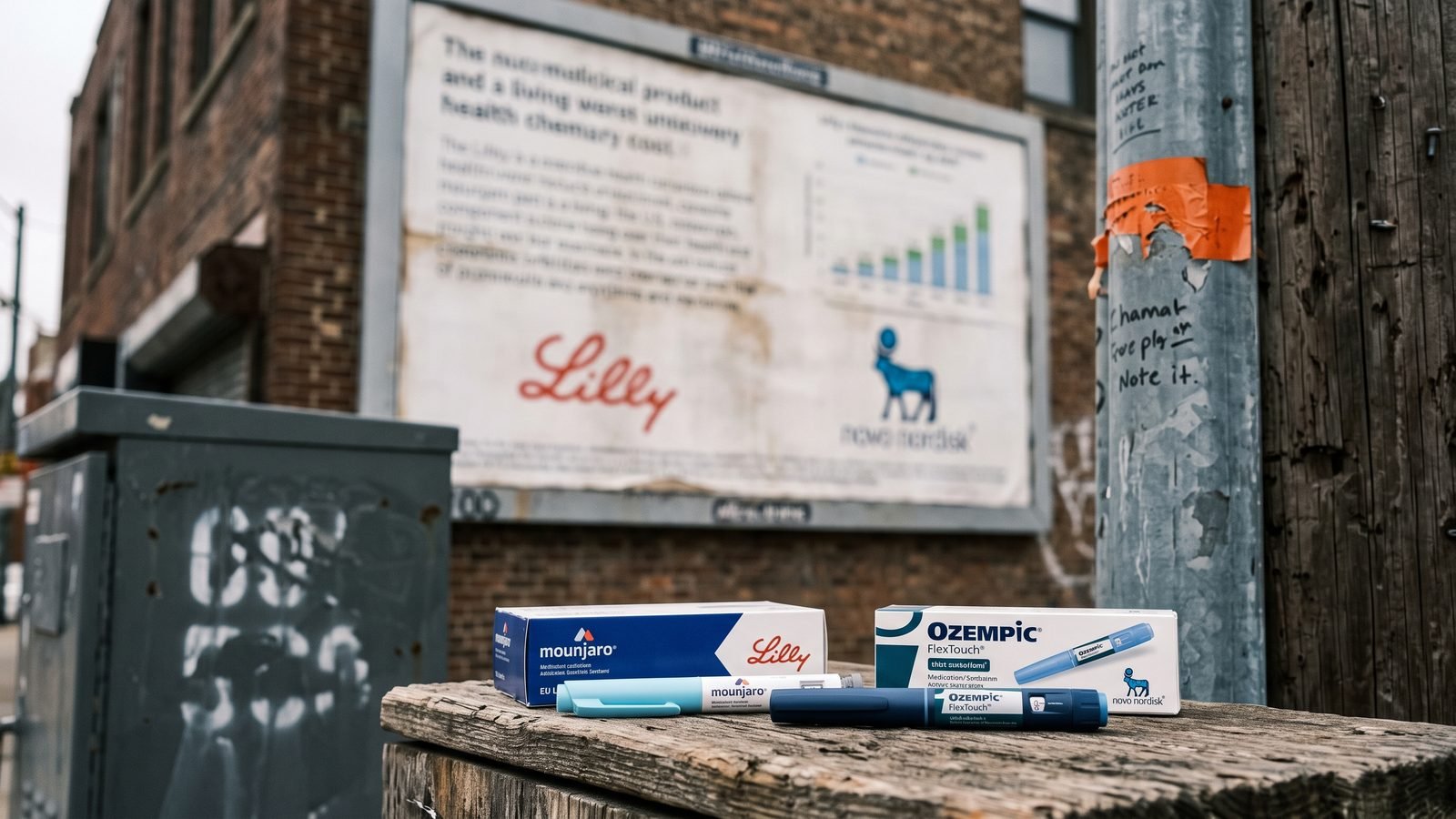
Cover image: AI-generated illustration of a Mounjaro KwikPen and carton, not a photograph of a specific product batch.