
The global pharmaceutical and medical technology landscape underwent a quiet but historic shift in June 2026. For the first time, under newly implemented US federal transparency requirements, major American multinational corporations were compelled to publicly disclose their tax payments on a country-by-country basis. The resulting disclosures published in early June 2026 have laid bare a stark economic reality: the sheer scale of US tech and pharmaceutical corporate tax payments pouring into the Irish exchequer.
Among the most headline-grabbing revelations was that of Indianapolis-based pharmaceutical giant Eli Lilly, which disclosed a staggering $6.6 billion corporation tax payment to the Irish state in 2025. Strikingly, this payment was exactly double the $3.3 billion the company paid to the US federal government in corporate income tax during the same calendar year. Similarly, Pfizer reported an Irish tax contribution of approximately $1.02 billion (€870 million), followed by Johnson & Johnson at $600 million, AbbVie at $431 million, and Bristol Myers Squibb at $179 million. Together with tech behemoths like Meta ($567 million) and Salesforce ($92 million), these figures demonstrate that Ireland has become a pivotal financial and operational engine for global life sciences.
For industry analysts, policymakers, and corporate executives, these disclosures prompt a critical, multi-billion-dollar question: Why does Ireland remain the ultimate choices for global pharmaceutical companies, and how does it maintain this dominance despite the implementation of the OECD Pillar Two 15% global minimum tax? To understand this phenomenon, we must look beyond simplistic tax-haven narratives and dissect the structural, fiscal, and operational ecosystem that makes Ireland an irreplaceable life science hub.
1. The Math: Comparing US and Irish Corporate Tax Architectures
At first glance, a statutory tax rate comparison explains why US pharmaceutical companies originally established a footprint in Ireland. For decades, Ireland’s 12.5% corporate tax rate on active trading income stood as one of the most competitive regimes in the developed world. However, the introduction of the OECD’s Pillar Two framework-which took effect for large multinational groups with consolidated revenues exceeding €750 million-pushed Ireland's effective tax rate for these giants to 15% through a Qualified Domestic Top-up Tax (QDMTT).
Even at 15%, the fiscal gap between Ireland and the United States remains massive, particularly when state-level taxes are factored into U.S. liabilities. The table below illustrates the core corporate tax rate differences between the two jurisdictions in 2026:
| Tax Parameter | United States (2026) | Republic of Ireland (2026) |
|---|---|---|
| Federal/Statutory Corporate Rate | 21.0% (Flat Federal Rate) | 12.5% (Trading) / 25.0% (Passive) |
| State and Local Corporate Taxes | Variable (Typically 1.0% to 11.5%) | 0.0% (No regional or municipal corporate taxes) |
| Combined Average Effective Rate | ~26.0% (Combined Federal + State) | 15.0% (OECD Pillar Two / QDMTT for groups >€750m) |
| Research & Development Tax Credit | Variable (Research Credit up to 20%) | 35.0% Cash-Refundable Credit (Increased in 2026) |
| Alternative Minimum Tax (AMT) | 15% CAMT (On corporate book income >$1B) | 15% QDMTT (Integrated Global Minimum Tax) |
| Intellectual Property Incentives | FDII (Foreign-Derived Intangible Income) ~13.125% | Knowledge Development Box (KDB) ~7.5% Effective Rate |
When analyzing a pharmaceutical product's lifecycle-where a single blockbuster drug can generate $5 billion to $15 billion in annual global revenue-an 11% tax differential between a U.S. manufacturing base (~26%) and an Irish manufacturing base (15%) represents hundreds of millions of dollars in net earnings. This cash conservation can be immediately redeployed into high-risk clinical pipelines or capital expenditure.
The Power of Ireland's 35% R&D Tax Credit
Crucially, corporate tax rates do not exist in a vacuum. A key pillar of Ireland’s fiscal appeal is its highly competitive **Research and Development (R&D) Tax Credit**. In Budget 2026, the Irish government implemented an increase in the R&D tax credit rate from 30% to 35%. This credit is designed as a volume-based incentive, allowing companies to claim a tax credit of 35% on all qualifying expenditure on research and development activities.
Unlike R&D tax incentives in many other countries, the Irish R&D tax credit is **cash-refundable** over a three-year cycle. If a pharmaceutical company has no tax liability in Ireland due to early-stage development or heavy capital investment, the state directly writes a cheque to the company to refund 35% of its R&D expenditure. This feature is a massive liquidity booster for both clinical-stage biotech startups and multinational giants establishing advanced therapy units. Furthermore, this credit is fully compatible with the OECD Pillar Two guidelines, meaning it does not trigger international top-up penalties, making it an exceptionally stable and attractive instrument for long-term fiscal planning.
2. Case Study: Eli Lilly's $6.6 Billion Irish Contribution
To appreciate how these fiscal architectures translate into real-world numbers, we must look at the financial filings of **Eli Lilly**. The company's $6.6 billion tax payment in 2025 represents a landmark event in corporate tax history. Why did Eli Lilly’s Irish tax contribution spike by over $4.2 billion compared to prior cycles?
The answer lies in the explosive commercial success of its Tirzepatide molecule, marketed globally as Mounjaro (for Type 2 diabetes) and Zepbound (for chronic weight management). As global demand for GLP-1 receptor agonists reached unprecedented heights, Eli Lilly relied heavily on its Irish operations to scale manufacturing.
Eli Lilly’s Irish footprint is centered around two massive pillars:
- Kinsale, Co. Cork: A campus that has evolved over forty years into a global biotechnology powerhouse. The Kinsale facility handles the highly complex chemical synthesis, active pharmaceutical ingredient (API) manufacturing, and monoclonal antibody production that forms the bedrock of Lilly's drug pipeline.
- Raheen, Co. Limerick: A brand-new, €1 billion state-of-the-art manufacturing facility designed to expand the production of biologic medicines and digital healthcare products. Raheen represents one of the largest single-site greenfield investments in the history of the Irish state.
Because the intellectual property, commercial manufacturing rights, and physical drug production of Tirzepatide are heavily concentrated within Lilly’s Irish corporate structures, a significant portion of global profits is booked in Ireland. Under the 15% effective tax rate, these massive profits translated directly into a $6.6 billion exchequer windfall for Ireland. This case study refutes the idea that Ireland's tax revenues are paper-only transactions; they are backed by multi-billion-euro physical factories, highly advanced bioprocess engineering, and massive physical export volumes of physical medicine shipped globally.
3. Beyond Tax: The Irish Biopharma Ecosystem and the Cluster Effect
While tax structures provide a highly attractive financial starting point, tax alone cannot explain why 10 of the top 10 global pharmaceutical companies maintain deep manufacturing bases in Ireland. In 2026, the global pharma sector is increasingly complex, requiring highly specialized skills, specialized supply chains, and absolute regulatory compliance. If tax were the only factor, companies would move to lower-cost jurisdictions. Instead, they continue to reinvest in Ireland due to the **"cluster effect"** and the country's unique ecosystem.
A. The Regulatory Gold Standard: HPRA and the European Market
For any pharmaceutical manufacturer, regulatory compliance is the single most critical factor for market access. Ireland’s **Health Products Regulatory Authority (HPRA)** is widely recognized as one of the most rigorous, efficient, and sophisticated medicines regulators in the world. As an EU member state, Ireland provides direct, frictionless access to the European Medicines Agency (EMA) and the single market.
Furthermore, HPRA facilities have a long, proven track record of passing US FDA inspections with minimal observations. When a company manufactures a sterile biologic drug in Ireland, they can be highly confident that the regulatory oversight, validation standards, and quality management systems align perfectly with both European and American expectations. This dual-market compliance removes massive operational risks for companies launching global blockbusters.
B. The Talent Pipeline and NIBRT
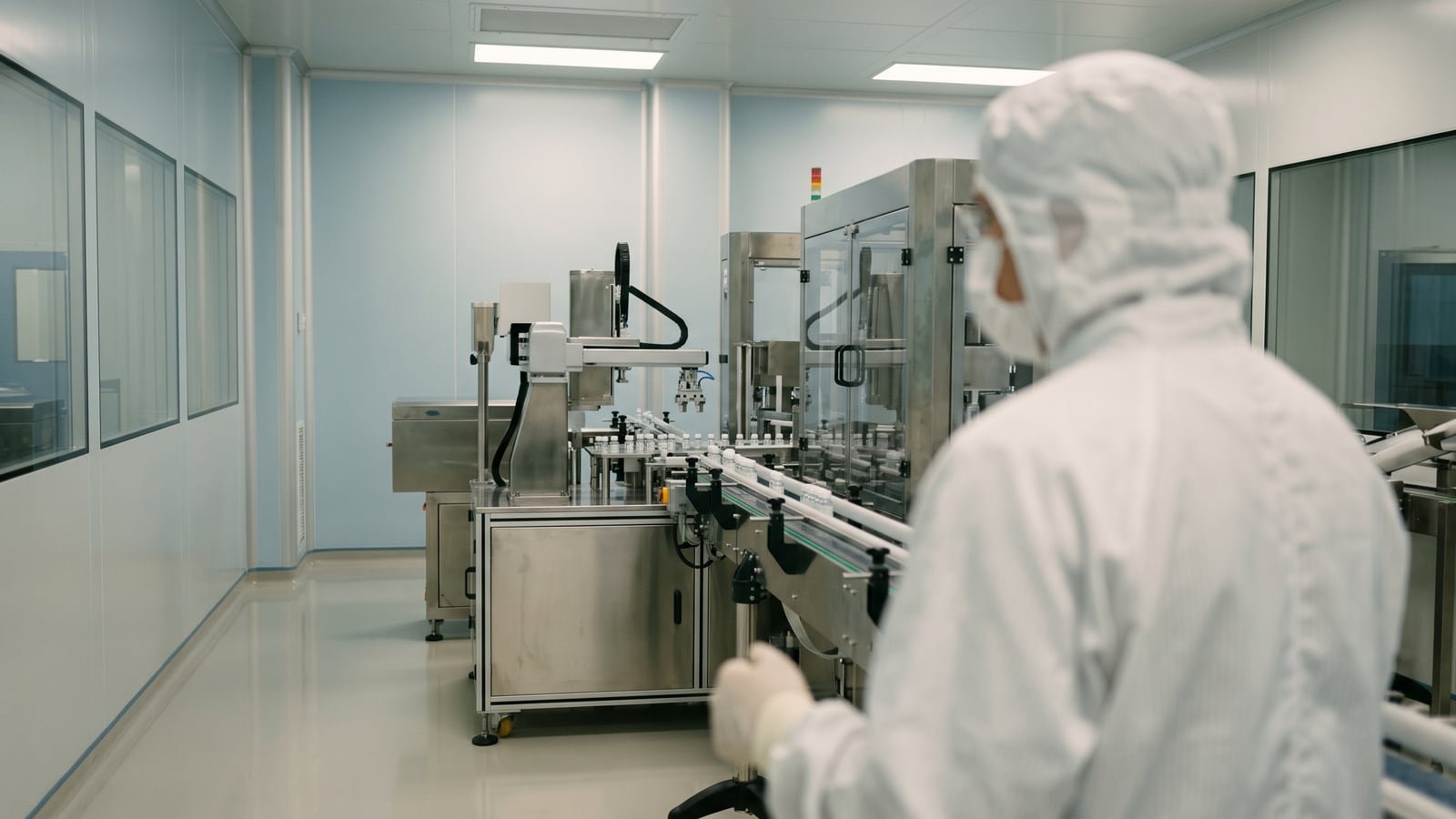
Biopharmaceutical manufacturing is not a low-tech assembly line. It requires cleanrooms, precise temperature controls, complex bioreactor management, and strict adherence to Good Manufacturing Practices (GMP). The availability of skilled talent is often the primary bottleneck for pharmaceutical expansion.
Ireland has resolved this bottleneck through coordinated state and academic partnerships, most notably the **National Institute for Bioprocessing Research and Training (NIBRT)**. Located in Dublin, NIBRT is a global center of excellence that trains over 4,000 biopharma professionals annually. The facility features a replica of a modern industrial bioprocessing plant, allowing students and industry professionals to train on state-of-the-art equipment in a non-commercial environment. Combined with the **SSPC (Synthesis and Solid State Pharmaceutical Centre)**-which links scientists across Irish universities with industry partners to advance crystal growth and formulation science-Ireland provides a continuous stream of specialized chemical engineers, biotechnologists, and quality control experts.
C. The Network and Supply Chain Integration
Because dozens of pharmaceutical and medical device giants operate within close proximity in areas like Ringaskiddy (Cork), Grange Castle (Dublin), and the Mid-West (Limerick/Galway), a highly specialized supply chain has emerged. Ireland hosts a dense network of:
- Contract Development and Manufacturing Organizations (CDMOs)
- Specialized cold-chain logistics providers
- Validation engineering consultancies
- Industrial gas suppliers, cleanroom designers, and clean-utility contractors
If a bioreactor component fails or a cleanroom requires immediate re-qualification, the engineering expertise is available locally. This level of cluster integration minimizes downtime, which can cost millions of dollars per day in high-volume commercial production.
4. Managing the Risks: Concentration and US Political Scrutiny
While the June 2026 tax disclosures highlight Ireland’s immense success, they also underscore significant systemic vulnerabilities. The **Irish Fiscal Advisory Council (IFAC)** and independent economists have repeatedly issued warnings regarding Ireland's **concentration risk**.
Currently, just three corporate groups-comprising two technology giants and one pharmaceutical firm-account for approximately **46%** of all Irish corporation tax revenues. A downturn in the fortunes of these companies, a patent cliff for a single blockbuster drug, or a change in global corporate structures could leave a multi-billion-euro hole in Ireland's national budget.
Furthermore, the high-profile nature of these disclosures-particularly Eli Lilly paying double its US federal liability to Ireland-places a political bullseye on Ireland’s back. US policymakers, across successive administrations, look at these disclosures with concern, viewing them as evidence of profit shifting out of the US tax base. This visibility increases the risk of targeted U.S. legislative actions (such as further modifications to the GILTI tax rules or domestic tax incentives) aimed at repatriating IP and manufacturing back to the United States.
To mitigate these risks, the Irish state has established two structural buffers:
- The Future Ireland Fund: A sovereign wealth fund designed to invest excess corporate tax windfalls into international assets, ensuring the state does not rely on transient corporate tax revenues to fund day-to-day public spending.
- Infrastructure Reinvestment: Channeling current tax revenues directly into physical infrastructure, electrical grid upgrades, water treatment facilities, and regional housing to support the continued expansion of the industrial base.
5. Conclusion: Why Ireland Remains Unrivaled in 2026
The US country-by-country tax disclosures of June 2026 have brought unprecedented clarity to the financial mechanics of global pharmaceuticals. The headline figures-led by Eli Lilly’s historic $6.6 billion payment-confirm that Ireland is not merely a booking center, but a vital physical and operational node in the global healthcare supply chain.
Despite the implementation of the OECD Pillar Two global minimum tax, Ireland’s formula for attracting pharmaceutical investment remains highly effective. By combining a stable, competitive 15% effective tax rate with a cash-refundable 35% R&D credit, world-class regulatory bodies like the HPRA, and training hubs like NIBRT, Ireland has built a defensive moat that cannot be easily replicated by lower-tax or lower-cost jurisdictions. For global pharma giants, Ireland is not just a tax location; it is the global standard for life science manufacturing.
Sources and Further Reading
- The Irish Times: "Irish tax payments by big US tech and pharma groups revealed" (Published June 5, 2026).
- Irish Fiscal Advisory Council (IFAC): "Fiscal Assessment Report: Corporate Tax Concentration and Expropriation Risk" (Published Q1 2026).
- Office of the Revenue Commissioners, Ireland: "Guidelines on the Implementation and Calculation of the Research and Development Tax Credit" (Updated January 2026).
- OECD: "Tax Challenges Arising from the Digitalisation of the Economy - Global Anti-Base Erosion Model Rules (Pillar Two)" (2024-2026 Implementation Updates).
- National Institute for Bioprocessing Research and Training (NIBRT): "Annual Biopharma Industry Talent & Training Report" (2025/2026).