
Executive Summary: The Pushback Against Cost-Containment
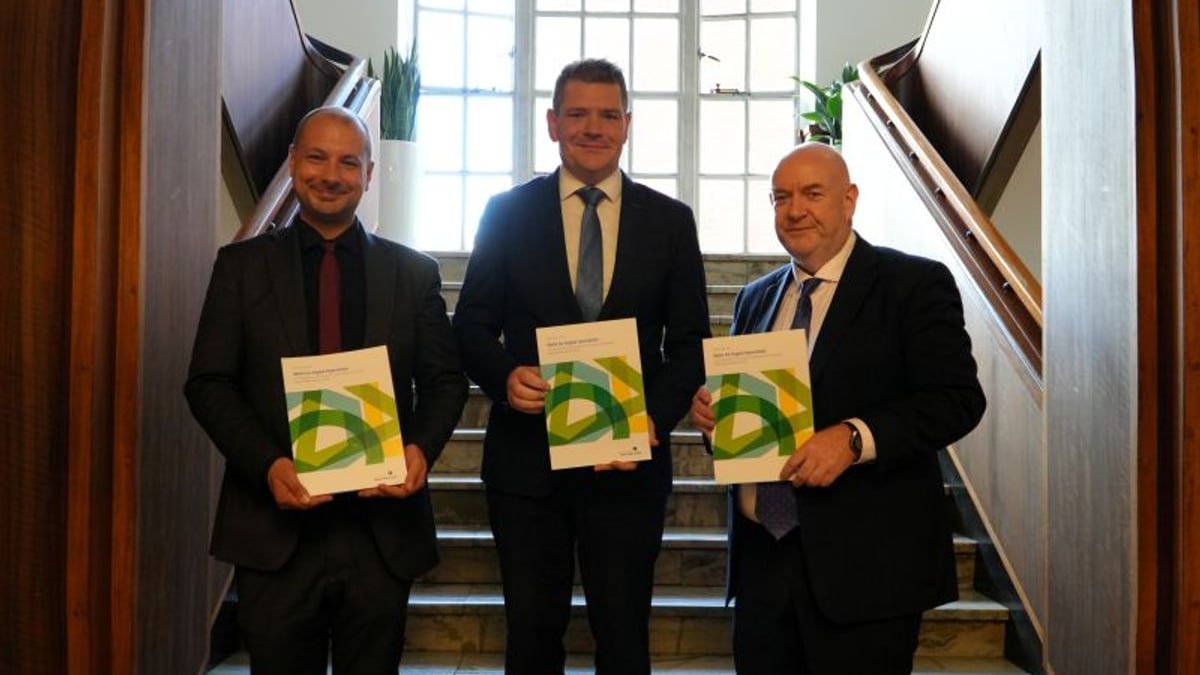
The Dutch innovative pharmaceutical industry accounted for an estimated €8.5 billion in gross added value in 2024, according to a landmark report published by the Dutch Association for Innovative Medicines (VIG). The findings represent a coordinated effort by the sector to redefine its public perception. Rather than being viewed simply as an escalating cost to the national healthcare system, the innovative pharmaceutical sector is positioning itself as a high-productivity, strategic economic asset. This commercial-grade analysis evaluates the VIG's report, explores the economics of industry-sponsored clinical research, and examines the structural challenges facing Dutch and European biopharmaceutical innovation amidst growing competition from China.
Section 1: Sizing the Dutch Life Sciences Footprint
ING healthcare economist Diederik Stadig described the VIG's €8.5 billion figure as "a good estimate," emphasizing that the country's underlying industrial fundamentals support such a valuation. "The Netherlands has a dense, high-productivity life sciences cluster, combining pharma, biotech and advanced manufacturing," Stadig noted. "Given the sector's capital intensity and export orientation, a multi-billion euro value-added contribution is highly credible."
The employment statistics released by the VIG highlight the scale of the sector. More than 46,000 people work in and around the Dutch pharmaceutical sector. Of these, approximately 20,000 are directly employed by pharmaceutical companies. Within this direct workforce, 10,400 individuals are engaged in pharmaceutical production, reflecting a resilient, high-wage manufacturing base. This dense concentration of skilled labor is key to driving the productivity gains that the industry is using to defend its position against proposed price controls.
Dutch Innovative Pharma: Key Figures
Estimated total economic contribution in 2024, driven by high-productivity clusters.
Including 20,000 directly employed and 10,400 in manufacturing roles.
Total value generated directly and indirectly by pharmaceutical studies.
Section 2: The Direct Economics of Clinical Research
A key focus of the VIG report is the economic contribution of industry-sponsored clinical research. The report notes that clinical studies directly support approximately 1,200 jobs in the Netherlands and generate more than €1.2 billion in gross added value. This total includes two distinct economic drivers: direct investment and indirect labor productivity gains.
First, €423.5 million stems directly from clinical studies, which includes investment in research, staff and dedicated facilities. Second, the VIG estimates that clinical studies contribute €723.3 million in improved labor productivity. By providing patients with early access to new treatments, studies help them recover faster and return to work sooner, preventing an estimated 1.6 million days of sick leave in the Netherlands. Across the broader European Economic Area (EEA), industry-sponsored clinical trials are estimated to have prevented 26.9 million sick days, showcasing the public health benefits and economic returns of clinical research.
Section 3: The Trade and Logistics Paradox
While the Netherlands remains a key pharmaceutical base, it is not one of Europe's largest manufacturing hubs. According to figures from the European Federation of Pharmaceutical Industries and Associations (EFPIA), Dutch pharmaceutical production stood at €7.3 billion in 2025. This puts the country 12th in Europe, well below larger production clusters such as Ireland, Switzerland, and Belgium.
However, the Netherlands operates a significant trade surplus in pharmaceutical products, which is detailed in the table below. In 2025, exports reached €56.1 billion, compared to imports of €44.4 billion, yielding a positive trade surplus of €11.7 billion. This surplus highlight a trade paradox: because of major logistics hubs like the Port of Rotterdam and Schiphol Airport, a large portion of this export value represents re-exports of finished medicines rather than domestic production. The VIG is using this distinction to urge the government to support domestic manufacturing alongside logistics capacity.
| Trade Metric (2025) | Value (Billions) | Key Drivers & Logistics Notes |
|---|---|---|
| Pharmaceutical Exports | €56.1bn | Driven by domestic manufacturing and significant re-export flows through Rotterdam and Schiphol. |
| Pharmaceutical Imports | €44.4bn | Inbound active ingredients, raw materials, and finished formulations for EU distribution. |
| Net Trade Surplus | +€11.7bn | Demonstrates the strategic role of the Netherlands as a primary logistical entry point to the European Union. |
Section 4: The Chinese Biopharma Rise and the European Challenge
The domestic debate over cost controls is happening alongside shifts in the global pharmaceutical market. Earlier this year, economists at ING predicted that the rapid rise of China as a hub for biopharmaceutical innovation means that "the next Pfizer" is likely to be Chinese. This projection highlights the structural differences in how innovation is supported and funded between regions.
Diederik Stadig notes that China's rise is built on a coordinated industrial policy, a common regulatory system, and rapid clinical execution. In contrast, European biopharma faces structural disadvantages. "For a 'Dutch Pfizer,' you would need more risk capital, faster trial and approval pathways, and a single market approach to innovation-not 27 fragmented ones," Stadig explained. Compared to the United States, Europe has shallower capital pools and more modest drug pricing, which can limit the financial returns needed to fund high-risk research. "Without significant change, breakthroughs will likely be commercialised elsewhere, even though European and Dutch science is top-notch," Stadig warned.
Conclusion: Unlocking Growth Capital
Overall, the Dutch innovative pharmaceutical sector is punching above its weight in terms of productivity and innovation relative to its size, which Stadig estimates is roughly half that of the country's semiconductor sector. However, to maintain competitiveness and secure supply chain resilience, the VIG and industry analysts argue that the Netherlands and the European Union must adjust their policy focus. Rather than focusing solely on short-term healthcare cost containment, policies should support long-term investment. As Stadig concluded, "The single most effective lever is unlocking growth capital and late-stage scaling in Europe, as well as finally harmonising European regulation."