
Aseptic filling operations rely entirely on the exclusion of microorganisms from sterile containers. Because sterilization cannot be performed on the final product container, the manufacturing process must be validated. Media Fill Validation, or Aseptic Process Simulation (APS), is the primary regulatory method used to prove that an aseptic process is sterile.
What is an Aseptic Process Simulation (APS)?
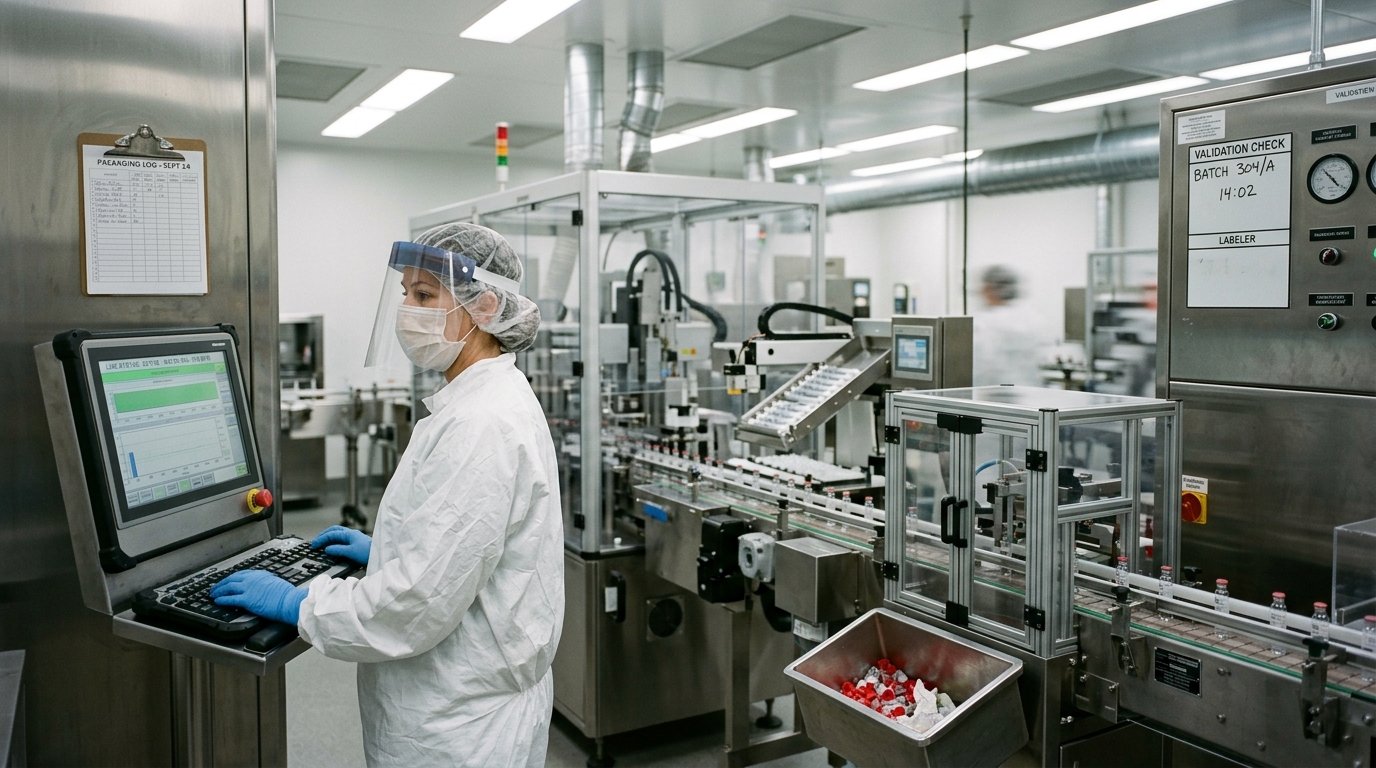
An APS simulates the actual commercial aseptic fill line by substituting the active liquid formulation with a sterile microbiological growth medium. The simulation must mirror all production steps, including container transfers, line interventions, shift changes, and machine shutdowns, exposing the process to potential microbial ingress.
Media Selection: Tryptic Soy Broth (TSB)
The default growth medium used is **Tryptic Soy Broth (TSB)** due to its low selectivity, allowing it to support the growth of a wide range of aerobic bacteria, yeasts, and molds. The medium must be validated for growth promotion before use in the simulation.
Incubation and Inspection Parameters
Once filled, the media containers are incubated under controlled conditions-typically 7 days at 20-25°C followed by 7 days at 30-35°C. Following incubation, every single vial is visually inspected for turbidity, which indicates microbial growth. Regulators maintain a zero-tolerance standard for contamination: even a single contaminated unit in a 10,000-unit run requires a thorough investigation and potential line shutdown.
Regulatory Focus and the Aseptic Process Simulation (APS) Design
Under the revised EU GMP Annex 1 guidelines, Media Fill Validation-formally termed Aseptic Process Simulation (APS)-is subjected to intense regulatory scrutiny. An APS must be designed to mimic the actual commercial manufacturing process as closely as possible. This means utilizing the same cleanroom environment, the same automated filling machinery, the same container closure systems, and involving all operators who perform interventions on the line. Instead of the active drug substance, a sterile culture medium (typically Soybean Casein Digest Medium or Tryptic Soy Broth) is filled.
The design of the media fill must account for the "worst-case" operating conditions of the manufacturing line. This includes simulating maximum run times, utilizing the maximum number of operators on shift, and executing the maximum number of permitted aseptic interventions (both planned and unplanned, such as clearing line jams, replacing filler needles, or adjusting sensors).
Incubation, Inspection, and Acceptance Criteria
Once filled, the media vials are incubated to encourage any microbial contaminants to grow. The standard incubation protocol is to hold the containers at 20°C to 25°C for at least 7 days, followed by 30°C to 35°C for another 7 days. This allows both slow-growing environmental molds and standard bacteria to multiply and become visible as turbidity (cloudiness) or sediment.
After incubation, every vial is visually inspected. The target acceptance criterion is zero growth. Under Annex 1, any growth of a microorganism in a media fill vial is considered an investigation-triggering event. A single contaminated unit indicates a potential failure in aseptic control, requiring a thorough root cause analysis, identification of the contaminant via genetic sequencing, and a potential halt to commercial production until the line can be re-qualified.
Frequently Asked Questions
How often must a sterile filling line undergo media fill re-qualification?
Initial qualification of a sterile filling line requires three consecutive successful media fill runs. Once qualified, routine re-qualification requires a minimum of one media fill run every 6 months for each aseptic line and shift.
What growth medium is standard for media fills and why?
Soybean Casein Digest Medium (also known as Tryptic Soy Broth) is the industry standard because it is a highly nutritious, non-selective medium that supports the growth of a wide range of aerobic bacteria, yeasts, and molds.
What happens if a media fill run fails with a positive unit?
A positive unit triggers an immediate investigation and line shutdown. Manufacturers must perform environmental audits, identify the microbial species, implement corrective actions, and perform three successful media fill runs to re-qualify the line before commercial production can resume.
Frequently Asked Questions
What growth medium is used in media fill validation runs?
Fluid Thioglycollate Medium (FTM) or Soybean Casein Digest Medium (SCDM/TSB) are commonly used due to their ability to support growth of both aerobic and anaerobic microorganisms.
How often must a sterile filling line undergo media fill validation?
Under EU GMP Annex 1 guidelines, each filling line must undergo media fill validation twice a year per shift (every 6 months) to maintain its validated state.
What is the limit for contaminated units in a media fill run?
The target limit is zero contaminated units. Any contaminated unit must trigger a formal investigation, a risk assessment of past batches, and re-validation of the filling line.
Frequently Asked Questions
What growth medium is used in media fill validation runs?
Fluid Thioglycollate Medium (FTM) or Soybean Casein Digest Medium (SCDM/TSB) are commonly used due to their ability to support growth of both aerobic and anaerobic microorganisms.
How often must a sterile filling line undergo media fill validation?
Under EU GMP Annex 1 guidelines, each filling line must undergo media fill validation twice a year per shift (every 6 months) to maintain its validated state.
What is the limit for contaminated units in a media fill run?
The target limit is zero contaminated units. Any contaminated unit must trigger a formal investigation, a risk assessment of past batches, and re-validation of the filling line.