

Key Takeaways
- The Irish Nationality and Citizenship (Amendment) Bill 2026 raises the residency requirement for citizenship from five years to eight and adds language, civics and income tests. For the life-science sector it is a workforce change, not an immigration headline.
- The roles that keep pharma, biotech and MedTech sites running (validation, QA and QC, regulatory affairs, automation, analytical science) are filled in large part by non-EU professionals on Critical Skills Employment Permits, precisely because the domestic pipeline cannot meet demand.
- For those workers the change means three more years of employer-tied permissions, visa applications for travel, families whose status depends on one job, no vote, and a new income threshold that hits technicians and operators hardest.
- Canada naturalises after three years, Australia after four, Germany, France and the Netherlands after five. Eight years moves Ireland from the European mainstream to the strict end of the table while those countries recruit the same profiles.
- For employers the cost arrives around year five: longer vacancies on Critical Skills roles, slipping tech-transfer timelines and lost process knowledge. A fair Bill would protect people already on the five-year path and keep five years for critical-skills roles.
Ireland built a life-science powerhouse by being the easiest place in Europe for global talent to land and stay. The Government is about to make it one of the harder places in Europe to become a citizen. This week the Minister for Justice brings the Irish Nationality and Citizenship (Amendment) Bill 2026 to Cabinet. The headline is simple: the residency requirement for Irish citizenship rises from five years to eight. Two of those years must be continuous immediately before applying, and six must fall within the previous ten. On top of that sit an English or Irish language test, a civics test on Irish society and the Constitution, an income-based self-sufficiency test, and new powers to revoke citizenship.
We covered the full proposal, the Minister's reasoning and the effect on nurses and care staff in our first analysis of the Bill. This article looks only at the life-science industry: the people on the plant floor, in the laboratories and in the regulatory offices, and the companies that depend on them.
Who this actually affects on a pharma or MedTech site
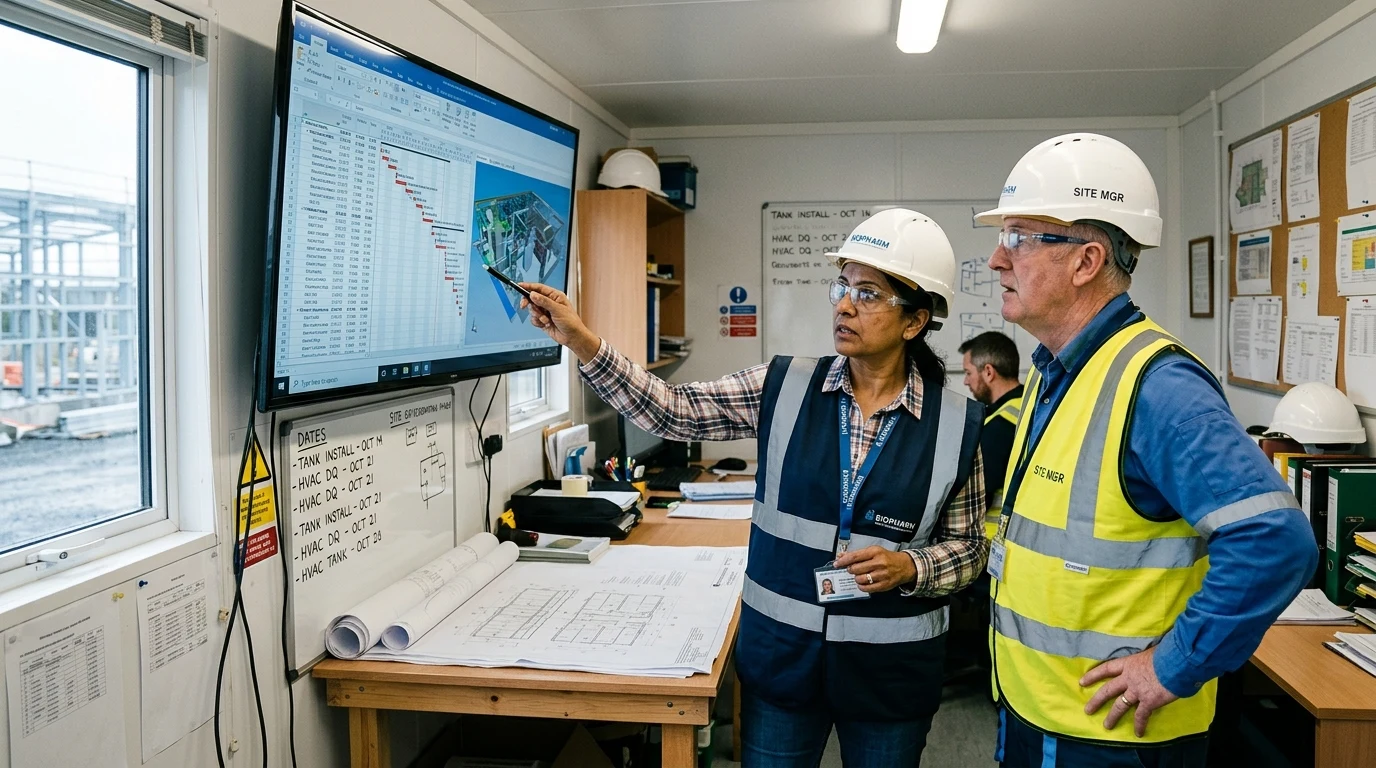
Walk through any large pharmaceutical or MedTech site in Ireland and you meet the people this Bill lands on. Process and validation engineers commissioning a new fill-finish line. QA and QC scientists releasing batches. Regulatory affairs specialists preparing EMA and FDA submissions. Automation, data and manufacturing-execution engineers. Microbiologists, analytical chemists, cleanroom technicians and equipment specialists.
A significant share of them are non-EU nationals who arrived on Critical Skills Employment Permits. Those occupations are on the Critical Skills list for one reason: Irish colleges do not produce enough of them to meet demand, and the sector keeps expanding. Healthcare and social work was the largest employment-permit sector in 2024 with 12,501 permits, a third of all permits issued, and the science, engineering and technical roles behind pharma manufacturing are consistently among the largest categories after it.
These are not people who arrived to claim anything. An employer proved the role could not be filled locally, the applicant met a salary threshold and a skills test, and every month since they have paid income tax, USC and PRSI at the top of the scale. The five-year path to citizenship was part of the offer that persuaded them to choose Cork or Limerick over Basel or Boston.
What changes for a scientist or engineer on a permit
Citizenship is not a sentimental milestone for a non-EU professional. It is the moment the permit system finally lets go. Under an eight-year rule that moment moves three years further away, and in the meantime:
- Status stays tied to the job. A Critical Skills permit holder moves to a Stamp 4 residence permission after two years, but Stamp 4 still needs renewal, still depends on continuous lawful residence, and is not a passport.
- Travel stays restricted. A non-EU engineer on Irish permissions needs visas for much of the world, including for the site visits, technology transfers, conferences and training that global pharma careers are built on. An Irish passport brings EU free movement and visa-free travel to most of the world, the single biggest quality-of-life change available to a skilled migrant in Europe.
- Families stay exposed. A spouse's right to work and a child's settled future are downstream of the principal applicant's permission. Losing a job in year six, through a site closure or restructuring, can restart a chain of immigration consequences that citizenship would have ended.
- No vote, no voice. Only citizens vote in Dáil elections and referendums. A scientist who has worked a decade in Irish industry would still have no say in the policies that govern it.
- A new income test. The Bill ties eligibility to income thresholds derived from CSO earnings data. For senior engineers this is irrelevant. For laboratory technicians and manufacturing operators on the lower permit thresholds, it may be the hurdle that decides the outcome.
The competition is not waiting five years, never mind eight
The Government's stated rationale, reported by The Irish Times, is to restrain growth in naturalisations and avoid being "out of synch" with other EU member states. The comparison does not support the number chosen.
| Destination with a major life-science cluster | Residence for citizenship | Who is hiring the same profiles |
|---|---|---|
| Canada | 3 of the last 5 years | Toronto and Montreal biomanufacturing, provincial immigration streams for STEM |
| Australia | 4 years | Melbourne biotech and CSL's manufacturing expansion |
| Germany | 5 years (3 for demonstrated integration) | Bayer, Boehringer, BioNTech, Sartorius; rules shortened in 2024 to attract skilled workers |
| Netherlands and Belgium | 5 years | Leiden bio science park, Janssen, UCB, Pfizer Puurs |
| Switzerland | 10 years (with a fast track for long-term residents) | Basel: Roche, Novartis, Lonza |
| United States | 5 years as a permanent resident | Boston and New Jersey; the green card queue is the real constraint |
| Ireland today | 5 years | Cork, Dublin, Limerick, Galway, Sligo, Westport |
| Ireland proposed | 8 years plus language, civics and income tests | Beside Denmark (9) and near Portugal, Spain and Italy (10) |
Standard naturalisation route for a non-EU adult worker as at September 2026, excluding ancestry and investment routes. Several countries are reviewing their rules; check official sources before relying on a figure.
Every destination in the first six rows has a pharmaceutical or MedTech cluster actively recruiting the same profiles. A validation engineer with GMP experience on an Irish biologics site is a hire in Toronto, Melbourne, Leverkusen or Leiden the week they decide to leave. "Aligning with Europe" would mean staying at five years. Eight years aligns Ireland with the strictest tier at exactly the moment the mainstream is competing harder for talent.
What it means for employers and for the country
The damage from a change like this does not appear in year one. It appears around year five, when the cohort that would have naturalised, settled and bought a house instead does the arithmetic and takes the offer from a competitor country.
For a site leader that shows up as:
- longer vacancies on roles that are already on the Critical Skills list;
- technology-transfer and validation timelines that slip because the engineer who knew the process has left;
- higher agency, relocation and onboarding costs on every replacement;
- a quieter loss of institutional knowledge that never makes it into a KPI until an audit or a deviation exposes it.
For the country it shows up in a weaker answer to the question every global pharma investment committee asks: can we staff this site? Ireland's pitch has always been talent, stability and ease of settling. Add three years to the citizenship wait, add tests and an income threshold, and the pitch gets weaker at the same time as the corporate tax advantage that used to carry it is being eroded by global minimum tax rules. That is a poor trade.
This is not an argument against reform
Nobody in the sector objects to a language requirement or a civics test in principle. Most of the people affected would pass both tomorrow. The objection, shared by Labour's justice spokesperson Alan Kelly, who warned the rule "could have a real negative impact on our ability as a nation to attract workers in critical areas", is to an arbitrary number applied to people who came legally, did exactly what was asked of them and planned their lives around a five-year path.
A fair version of this Bill would:
- Protect everyone already resident before commencement under the five-year rule they planned around. Retrospective changes are what destroy trust in a system.
- Keep five years for critical-skills, health and care roles, as Germany's shorter route and Canada's three-year rule already do for the workers those countries most need.
- Count every year of lawful work in full: employment permits, graduate permissions and Stamp 4 alike.
- Fund the language and civics courses the State wants people to pass, at hours a shift worker can attend.
- Drop an income threshold that punishes the technicians and operators whose wages the permit system itself sets.
- Fix decision times before extending the wait, so that a longer residency rule is not stacked on top of a long processing queue.
What life-science professionals and employers should do now
Anyone who already meets the current five-year requirement should apply now rather than wait. Everyone else should keep a complete record of permissions and residence and watch the transitional provisions closely, because whether people already here are protected is the single most important detail still to be decided.
Employers, industry bodies and site leaders have a window. The Bill goes to the Oireachtas Justice Committee for pre-legislative scrutiny, and that committee takes written submissions. The sector that will feel this change first should be the one telling the committee what it costs.
Ireland asked the world's scientists and engineers to come and build its life-science industry. They came. The least the State can do is keep the terms it offered them.
Frequently Asked Questions
Does the eight-year rule apply to Critical Skills Employment Permit holders?
Yes. No carve-out for critical-skills, science or engineering roles has been announced. Critical Skills holders can move to Stamp 4 after two years, but the Bill as described requires eight years of residence in total before a citizenship application.
Would time on a Stamp 1G graduate permission or a student permission count?
Under current rules time on a student permission (Stamp 2) is not reckonable, while time on Stamp 1G and on employment permits is. The Bill has not yet been published in full; whether all lawful working time will continue to count is one of the questions the sector should raise during scrutiny.
Is citizenship really a factor in where scientists choose to work?
For EU nationals, no. For the non-EU professionals who make up a large share of Irish pharma and MedTech technical staff, yes: it ends employer-tied status, opens visa-free travel for work, and secures the family's position. Countries such as Germany shortened their timelines in 2024 for exactly this reason.
What can employers do?
Make written submissions to the Oireachtas Justice Committee during pre-legislative scrutiny, individually and through industry bodies; quantify the cost of vacancies and attrition on Critical Skills roles; and communicate clearly with affected staff about the current five-year rule so that eligible employees apply now.
When would the change take effect?
Cabinet approval for priority drafting comes first, followed by pre-legislative scrutiny, publication of the Bill and passage through both Houses. Enactment in 2027 is realistic if it is prioritised; the commencement date will be set in the Act.
Sources: Irish Nationality and Citizenship (Amendment) Bill 2026 as reported by The Irish Times, RTÉ and the Irish Examiner (7 September 2026); Labour Party statement by Alan Kelly TD; Department of Enterprise employment permit statistics 2024; national citizenship legislation of the countries listed. This article is editorial analysis and is not legal or immigration advice.