
The clearest lessons for healthcare project management come from project management failures on Ireland's megaprojects. They run late and over budget for three recurring reasons: estimates that understate cost and risk, contracts that set client and contractor against each other, and approval chains long enough for inflation to compound. The national children's hospital shows all three.
- National children's hospital: first costed at €650m in 2015, now sanctioned at €2.24bn. BAM has lodged 3,407 substantiated claims worth €942.8m, and there is still no agreed completion date.
- MetroLink: about €3bn in 2018, €9.5bn in 2022, and €14.44bn to €17.49bn when the Government cleared it for tender on 16 September 2026. First services are expected between 2036 and 2038.
- Irish Rail's DART+ programme: €2bn in the 2018 plan and more than €2.6bn by 2020. DART+ West starts construction in 2027; DART+ South West has consent but construction is deferred to 2030 or later.
- Across the EU: the European Court of Auditors found eight flagship transport projects running 82% over their original estimates, with an average delay of 17 years. Rail Baltica is up 291%.
- What changes outcomes: realistic baselines, collaborative contracts that share risk, design maturity before tender, and treating commissioning as part of the critical path.
A delivery problem, not a funding problem
Ireland is not short of capital for infrastructure. The revised National Development Plan commits tens of billions to transport, water and health over the coming decade. The difficulty is converting that money into finished assets on the dates and budgets announced. For project professionals in healthcare and beyond, the useful question is not whether overruns happen, but why the same failure modes appear on projects as different as a hospital, a metro and a water pipeline.
This article starts with the national children's hospital, a €2.24bn healthcare build, then sets out what the official record shows for Ireland's largest transport and water projects, Irish Rail's DART+ programme and six European comparators. For each one it names the client, the main contractors and advisers, and the people responsible. Every figure links to its source.
The national children's hospital: a contract that became a dispute
The client is the National Paediatric Hospital Development Board (NPHDB), and the future operator is Children's Health Ireland (CHI). The main contractor is BAM Ireland, part of the Dutch group Royal BAM. The design team is led by architects BDP with O'Connell Mahon Architects, with HLM and Coady Partnership Architects on the satellite centres and Arup on engineering and digital systems.
When the St James's site was chosen in August 2015, the first figure announced was €650m, or about €800m including equipment, with completion expected by 2020. The main contract signed in 2017, worth about €983m, set a completion date of August 2022. In 2019 an independent review by PwC, commissioned after costs reached €1.43bn, projected a final cost above €1.73bn and pointed to a cost envelope that never matched the scope, continuous design change and weak oversight. The budget now stands at €2.24bn, the maximum allocation confirmed in February 2024.
The dispute has become the project. By September 2026 BAM had lodged 3,407 substantiated claims worth €942.8m and secured about €108m, roughly 7% of the value claimed, with six disputes before the High Court. The board has estimated liquidated damages of €40.2m against BAM. At the Public Accounts Committee in April 2026, officials described 23,500 drawing reissues and €5.3m in legal fees, and the Irish Times reported 106,500 defects and 19 changes to the completion date. BAM's own explanation is the clearest project-management lesson in the file: "Until the design is fully finalised, completion dates will continue to evolve."
The NPHDB's chief officer, David Gunning, told the committee: "We are close - it's months we're talking about." Its project director, Phelim Devine, described the remaining work as "moving a socket in a room, or it's adding an emergency light." Dust in the ventilation ducts has been cited as one of the main issues holding up completion.
The Minister for Health, Jennifer Carroll MacNeill, met Royal BAM's chief executive, Ruud Joosten, in March 2026 to secure more resources on site. On 8 September she described the parent company's commitments as "wholly and entirely insufficient", and on 22 September she said: "What is needed now from BAM is certainty, adequate resourcing, and real productivity to complete the job." The Taoiseach, Micheál Martin, has said EU procurement rules prevent the State barring BAM from future contracts on the basis of this project.
For healthcare project managers, the final phase matters most. CHI's chief executive, Lucy Nugent, has said the hospital will open "when it is safe to do so and approximately seven months after we 'receive the keys'". Commissioning, equipment validation and staff readiness cannot start until handover, so every construction delay moves the opening date one for one.
MetroLink: the cost of a long approval chain
MetroLink is promoted by Transport Infrastructure Ireland (TII), with the National Transport Authority (NTA) as funder and the Department of Transport as sponsoring department. A Jacobs and Idom consortium has been the employer's designer since 2018.
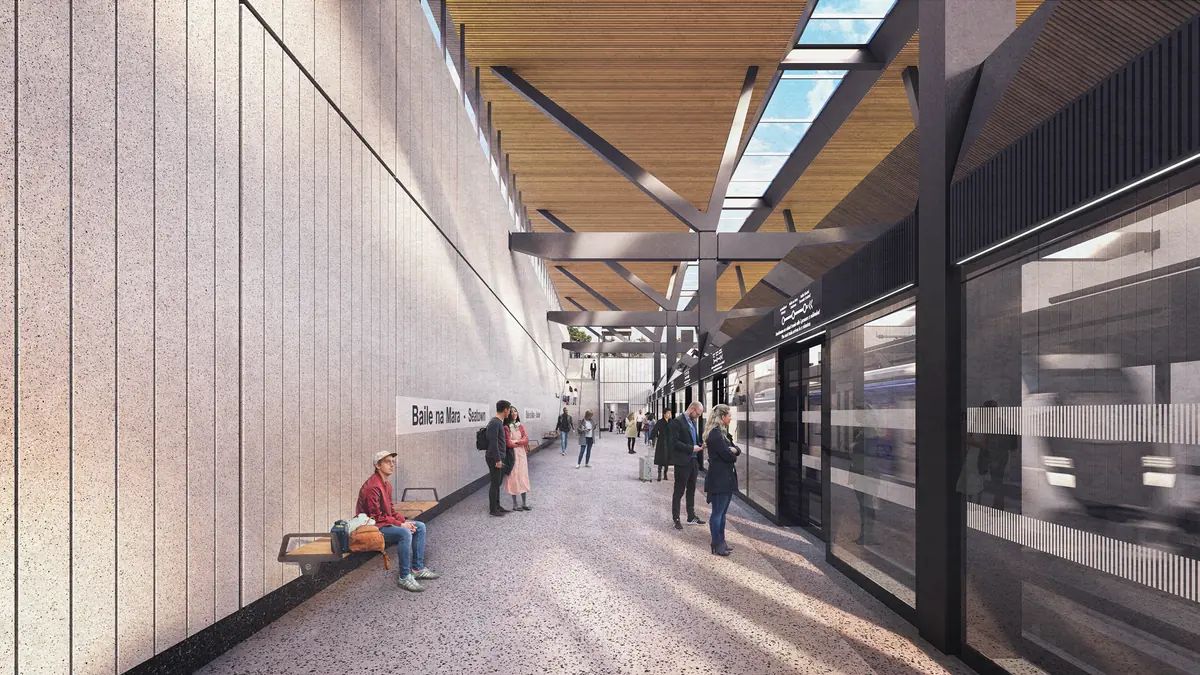
In 2018 the line was presented at about €3bn with a 2027 opening. By July 2022 the estimate was €9.5bn, with opening targeted for 2031 to 2034. An Coimisiún Pleanála granted the Railway Order on 2 October 2025. On 16 September 2026 the Government cleared the project for tender at €14.44bn to €17.49bn, with a central estimate of €15.75bn that includes a €3.49bn risk allowance and €2.16bn for inflation. Enabling works start in 2027, tunnelling in 2028, and first services are expected between 2036 and 2038. RTÉ reported that about €750m will have been spent or committed by the end of 2026.
The market is now engaged. On 10 September 2026 a Jacobs and AECOM joint venture was appointed programme delivery partner, a contract worth about €550m over up to 12 years. For the main M500 public-private partnership, launched in May 2026, two groups are bidding: one led by Plenary with Webuild, Hitachi Rail and Keolis, and one including FCC, Meridiam, John Laing, RATP Dev and Alstom.
TII's chief executive, Lorcan O'Connor, put the key point plainly: "It's important to state the tenderers will establish the true market price." The Minister for Transport, Darragh O'Brien, said: "We want to deliver this on time and on budget." MetroLink shows how an early figure, announced at concept stage, becomes the benchmark every later estimate is judged against, and how eight years between estimate and tender absorb years of construction inflation. The programme is now led by interim programme director Michael Flynn after Seán Sweeney's departure in April 2026, and the NTA by chief executive Anne Shaw.
Roads, buses and water: the pipeline behind the headlines
M20 Cork to Limerick
The scheme is led by Limerick City and County Council with Cork County Council and Cork City Council, funded through TII, with Barry Transportation, Sweco and WSP as technical advisers. In 2018 it was expected to cost €850m and open by 2027. By June 2025 it was a €2bn scheme. The project co-ordinator, Jari Howard, set out the timeline: "We plan to begin enabling works in 2028, things like service diversions, and then construction takes seven years, so that gives us a completion date of 2035." The Mayor of Limerick, John Moran, has said the road will replace "one of the most dangerous roads in the country".
BusConnects Dublin
The core bus corridor programme is sponsored and delivered by the NTA. Launched in 2017 at about €1bn with delivery by 2027, it was estimated in 2024 at €2.62bn to €3.37bn, with completion moved to 2030. Each corridor needs its own approval from An Coimisiún Pleanála, and some have faced judicial review. Construction is now under way: the second corridor contract, Ballymun and Finglas to the city centre, with a total scheme cost of up to €366m, was awarded to GRAHAM in December 2025. Dermot O'Leary, general secretary of the National Bus and Rail Union, summed up the frustration with delays in 2024: "This is history repeating itself."
Eastern and Midlands Water Supply Project
The Shannon-to-Dublin pipeline is promoted by Uisce Éireann, with TOBIN among its lead consultants on source selection. In January 2019 it was a €1.3bn project with supply targeted from 2025, and the Commission for Regulation of Utilities was asked to review it. The planning application lodged in December 2025 put the budget at €4.58bn to €5.96bn for a 170km route, with five years of construction from 2028. Uisce Éireann's infrastructure delivery director, Maria O'Dwyer, said the region's "growing water supply deficit and lack of supply resilience" is "simply not sustainable". The River Shannon Protection Alliance argues the cost could reach about €10.4bn.
In July 2026 An Coimisiún Pleanála said it would decide before 2 July 2027, citing "the need for further consideration of the case", and water is now expected around 2032. The Minister for Public Expenditure and Infrastructure, Jack Chambers, criticised opposition from some councils as "very parochial", and the Taoiseach has said: "We cannot really move forward as a country if we are going to continually delay what I call essential infrastructure."
Irish Rail's DART+ programme: consent is not delivery
Iarnród Éireann promotes the DART+ programme, funded by the NTA, to extend electrified DART services to Maynooth, Hazelhatch and Drogheda. The 2018 National Development Plan allocated €2bn. By February 2020 the estimate was over €2.6bn, driven by inflation, extra carriages and a possible Docklands station move. Pre-construction spending across the programme had passed €153m by April 2025.
DART+ West
The 40km DART+ West line to Maynooth and M3 Parkway received its Railway Order in July 2024, which became operative in June 2025 after a judicial review. In September 2026 compulsory purchase notices went to 206 landowners, and construction is due to begin in 2027. No main construction contractor has yet been announced. Iarnród Éireann's chief executive, Mary Considine, said the line "will deliver a turn up and go level of rail service, with stops every 10 minutes".
DART+ South West
The 20km electrification to Hazelhatch and Celbridge received planning permission on 13 November 2024. The original plan was construction from 2027 and completion in 2032, but the November 2025 review of the National Development Plan moved construction to "2030+", with a cost of more than €1bn and over €35m already spent. The Minister for Transport has said that "timeframes in the NDP are indicative". Deferring a consented project is expensive: design teams disband, supply-chain interest fades and consented designs age.
DART+ Coastal North, the new fleet and Cork
DART+ Coastal North, 37km of electrification from Malahide to Drogheda, was approved in August 2025. The trains are already on order: under a 2021 framework for up to 750 carriages, Alstom received a first order of 95 carriages worth €318m, 65 of them battery-electric, and a third order in December 2025 brought the total to 285 carriages, with Government investment of €670m. The first 95 are due in service from the first half of 2027. Buying fleet ahead of infrastructure is a deliberate hedge: the battery-electric trains can run before electrification is complete. In Cork, the €1.8bn Cork Area Commuter Rail programme has largely completed its first phase, including a new through-platform at Kent Station funded by the EU Recovery and Resilience Facility.
The European picture
These are not uniquely Irish failings. In January 2026 the European Court of Auditors reported that eight flagship EU transport projects were running 82% above their original cost estimates in real terms, from €36.5bn to €66.5bn in 2019 values, with an average delay of 17 years, up from 11 years in 2020. Annemie Turtelboom, the Court member who led the audit, said: "EU transport flagship infrastructures are supposed to reshape Europe, bringing people closer together and facilitating economic activity. But three decades after most of them were designed, we are still a long way from cutting the ribbon on these projects." The projects are co-funded through the European Commission's Connecting Europe Facility, managed by its agency CINEA.
Stuttgart 21, Germany
The new underground through-station is owned by Deutsche Bahn and delivered by its subsidiary DB Projekt Stuttgart-Ulm, with the State of Baden-Württemberg, the City of Stuttgart, the Verband Region Stuttgart and the federal government as financing partners. The station was designed by ingenhoven associates. The 2009 financing agreement put the cost at about €4.5bn with completion in 2019. In June 2026 Deutsche Bahn added a further €3bn, taking the total to about €14.5bn, with the main station now due in December 2031 and all elements by December 2033. A group audit found "serious deficiencies in planning, control, and risk management", and Deutsche Bahn's chief executive, Evelyn Palla, said: "To put it bluntly: I am appalled by the results of the group audit." Klaus Müller took over DB Projekt Stuttgart-Ulm in March 2026.

Flamanville 3, France
EDF began building its first European Pressurised Reactor at Flamanville in 2007, with a budget of €3.3bn and completion due in 2012. Framatome supplied the nuclear steam supply system and the reactor vessel head. The French Cour des comptes, under its first president Pierre Moscovici, put the total cost at €23.7bn in 2023 euros, including financing costs. The nuclear safety regulator, now ASNR, authorised commissioning in May 2024 on condition that the flawed vessel head is replaced at the first refuelling outage. The reactor connected to the grid in December 2024, reached full power in December 2025, and was scheduled to shut down on 26 September 2026 for its first full inspection, an outage of about 350 days. EDF has been led since May 2025 by Bernard Fontana, formerly chief executive of Framatome.
Rail Baltica, Lyon to Turin, the Brenner Base Tunnel and Seine-Nord Europe
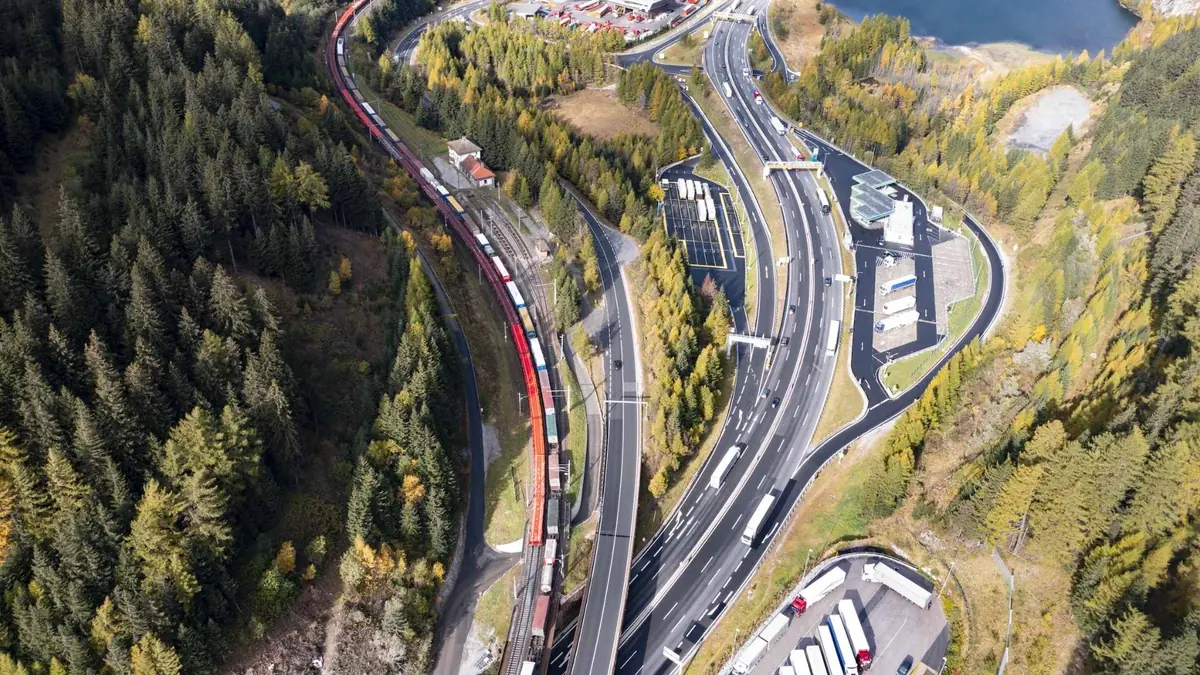
The Court's figures, in 2019 values, show how far the other flagship projects have moved. Rail Baltica, coordinated by the joint venture RB Rail with national implementers in Estonia, Latvia and Lithuania, has risen from €4.6bn to €18.2bn, up 291%, and only a first, single-track phase is due by 2030. The Lyon to Turin rail link, promoted by the Franco-Italian company TELT with tunnelling contracts held by groups including VINCI Construction Grands Projets, Webuild, Eiffage Génie Civil, Spie Batignolles and Ghella, is up 127% with opening moved from 2015 to 2033. The Brenner Base Tunnel, built by the Austro-Italian company BBT SE, is up 40% with opening moved from 2016 to 2032; its main tunnels broke through on 28 July 2026. The Seine-Nord Europe canal, run by the Société du Canal Seine-Nord Europe, is up 225% with opening moved from 2010 to 2032, the longest delay of the eight.
The figures side by side
| Project | Client and key contractors | First estimate | Latest estimate | First target | Latest target |
|---|---|---|---|---|---|
| National children's hospital, Dublin | NPHDB; BAM Ireland; BDP, O'Connell Mahon, Arup | €650m (2015) | €2.24bn sanctioned (2024) | 2020 (2015 plan); August 2022 (2017 contract) | Opening in 2027, no agreed completion date |
| MetroLink, Dublin | TII, NTA; Jacobs/Idom; Jacobs-AECOM | About €3bn (2018) | €14.44bn to €17.49bn (2026) | 2027 | 2036 to 2038 |
| M20 Cork to Limerick | Limerick City and County Council, TII; Barry, Sweco, WSP | €850m (2018) | About €2bn (2025) | 2027 | 2035 (full completion) |
| BusConnects, Dublin | NTA; GRAHAM (second corridor) | About €1bn (2017) | €2.62bn to €3.37bn (2024) | 2027 | 2030 |
| DART+ programme | Iarnród Éireann, NTA; Alstom (fleet) | €2bn (2018) | Over €2.6bn (2020) | South West: completion 2032 | West: construction 2027; South West: construction "2030+" |
| Eastern and Midlands Water Supply | Uisce Éireann; TOBIN | €1.3bn (2019) | €4.58bn to €5.96bn (2025) | 2025 | About 2032 |
| Stuttgart 21, Germany | Deutsche Bahn; DB Projekt Stuttgart-Ulm | About €4.5bn (2009) | About €14.5bn (2026) | 2019 | 2031 (station), 2033 (all works) |
| Flamanville 3, France | EDF; Framatome | €3.3bn (2007) | €23.7bn (2023 euros, incl. financing) | 2012 | Full power reached December 2025 |
| Rail Baltica, Baltic states | RB Rail and national implementers | €4.6bn* | €18.2bn* (2025) | 2026 | First phase only by 2030 |
| Lyon to Turin, France and Italy | TELT; VINCI, Webuild, Eiffage, Spie Batignolles, Ghella | €5.2bn* | €11.8bn* (2025) | 2015 | 2033 |
| Brenner Base Tunnel, Austria and Italy | BBT SE | €6.0bn* | €8.4bn* (2025) | 2016 | 2032 |
| Seine-Nord Europe canal, France | Société du Canal Seine-Nord Europe | €1.7bn* | €5.4bn* (2025) | 2010 | 2032 |
* European Court of Auditors Special Report 02/2026, in 2019 values. First estimates were often made before scope was defined, so the gap between the columns reflects both cost growth and early under-estimation. Sources are linked in the sections above.
What the evidence says about causes
Optimism bias and strategic misrepresentation
Bent Flyvbjerg's research on large projects describes two forces behind unrealistic early estimates: optimism bias and strategic misrepresentation. The first is a genuine tendency to plan around the best case; the second is the incentive to present a low number to secure approval. His remedy, reference class forecasting, bases estimates on the actual outcomes of comparable completed projects. The Court of Auditors found that about half of Rail Baltica's increase came from immature earlier estimates rather than new scope.
Adversarial procurement and immature design
Traditional contracts awarded largely on price, with design incomplete at tender, reward contractors for pursuing variations and turn the client's team into a claims-management operation. The children's hospital's 23,500 drawing reissues and more than 3,400 claims are what that looks like in practice. Collaborative models such as alliance contracting and integrated project delivery tie the contractor's reward to overall outcomes and share risk openly. They need an experienced client, but they remove the incentive to profit from ambiguity.
Weak planning, control and risk management
Deutsche Bahn's own audit of Stuttgart 21 and the PwC review of the children's hospital reached the same conclusion from different directions: the problem was not only the market or the ground, but the client's grip on planning, interfaces and risk. That is a capability question, and it is where project management offices can make the biggest difference.
Time and stop-start funding
Every year between first estimate and contract award adds construction inflation, changes in standards and staff turnover. MetroLink, the M20 and the water pipeline each spent most of a decade in design and consenting, and DART+ South West shows the cost of pausing a project after consent. Faster, better-resourced consenting and stable multi-year funding for nationally strategic projects would reduce cost as well as delay.
What this means for healthcare and life-science projects
Healthcare projects carry an extra phase that transport projects do not: once construction ends, a hospital still needs months of commissioning, equipment validation and staff readiness before it can treat patients. At the children's hospital that is expected to take about seven months after handover. Healthcare project plans should treat commissioning and operational readiness as part of the critical path from the start, not as a phase that begins when the builder leaves.
Ireland's pharmaceutical and biotech manufacturers run large capital programmes of their own: new biologics plants, fill-finish lines and site expansions, each followed by qualification and validation. The same mechanics apply. A cost figure fixed before process design is mature, a contract that pushes risk onto one party, or a validation schedule that assumes nothing goes wrong will produce the same outcomes on a private site as on a public one. Our earlier analysis looks at how digital project management practices can turn these lessons into delivery in life sciences.
Frequently asked questions
Q: What can healthcare project management learn from megaprojects?
A: Treat commissioning and operational readiness as part of the critical path, base budgets on comparable completed projects, finish design before tender, and choose contracts that share risk rather than generate claims. The national children's hospital shows the cost of getting these wrong.
Q: Who is building the national children's hospital?
A: The client is the National Paediatric Hospital Development Board, the main contractor is BAM Ireland, part of Royal BAM Group, and the lead architects are BDP with O'Connell Mahon Architects. Children's Health Ireland will operate the hospital.
Q: Why do megaprojects go over budget?
A: Research by Bent Flyvbjerg and others points to optimistic early estimates, strategic under-pricing to win approval, design that is incomplete at tender, adversarial contracts and long approval periods during which prices rise.
Q: How much will MetroLink cost and who is involved?
A: When the Government cleared it for tender on 16 September 2026, the estimate was €14.44bn to €17.49bn. TII is the promoter, Jacobs and AECOM are the programme delivery partner, and consortia led by Plenary and by a group including FCC and Alstom are bidding for the main contract.
Q: When will the national children's hospital open?
A: As of September 2026 there is no agreed completion date. Children's Health Ireland expects to open in 2027, about seven months after the building is handed over.
Q: Is Ireland worse than other EU countries?
A: No. The European Court of Auditors found eight EU flagship transport projects 82% over their original estimates, with an average delay of 17 years. Stuttgart 21, Rail Baltica and the Lyon to Turin link show similar or larger overruns.
Outlook
For healthcare project managers, the children's hospital is the case to watch: handover, then about seven months of commissioning, will show whether the lessons of the build are applied to the fit-out. The next year brings several other tests. MetroLink moves through tender with enabling works due in 2027, DART+ West starts construction, An Coimisiún Pleanála will decide on the Shannon pipeline by July 2027, and the first new DART carriages enter service. Whether these projects repeat the pattern will depend less on the money available than on how estimates, contracts and consents are managed from here.