
The global medical technology (MedTech) supply chain has experienced unprecedented volatility over the past few years. From microchip shortages disrupting critical diagnostic devices to transport backlogs affecting active pharmaceutical ingredients, medical device manufacturers have realized that relying on hypersensitive global logistics chains is a major operational vulnerability. In response, Ireland is shifting toward a highly localized, cluster-driven MedTech ecosystem designed to ensure business continuity, strict compliance, and rapid prototyping capabilities.
Ireland has long been established as a global MedTech powerhouse. Supported by agencies like Enterprise Ireland and IDA Ireland, regional hubs spanning Galway, Limerick, and Athlone host major clusters of medical device manufacturers and specialist suppliers. By establishing co-located ecosystems, these regional networks allow small and medium enterprises (SMEs) to share high-end calibration, cleanroom testing, and rapid prototyping infrastructures-minimizing capital investment while ensuring complete adherence to international quality standards.
This article provides an in-depth analysis of Ireland's localized MedTech value chains, discussing the shared facility infrastructure model, localized regulatory compliance frameworks, and how local teams leverage client-side tools like Priya LifePDF to safeguard document control and calibration logs without data security risks.
- Global Supply Chain Fragility: Moving toward regional value chains in Ireland
- The Shared Infrastructure Model: Medical device parks in Galway, Limerick, and Athlone
- Co-located cleanrooms, prototyping facilities, and specialized calibration laboratories
- Document Control & Calibration Records: Addressing the GxP data integrity gap
- Decentralized calibration log processing: Integrating client-side Priya LifePDF
- Readiness Checklist: Auditing your localized MedTech supplier compliance
Global Fragility vs. Local Agility: The Irish MedTech Response
Medical device manufacturing is subject to rigorous regulatory oversight under the EU Medical Device Regulation (MDR). When a single component or material supplier is changed, manufacturers must undergo complex change control procedures, component re-testing, and database updates. Consequently, component shortages in a globalized supply chain do not just delay production; they trigger regulatory compliance gridlocks.
By localizing the supply chain within regional clusters, Irish manufacturers reduce shipping delays, simplify compliance, and build collaborative supplier relationships. The table below illustrates the critical differences between globalized supply chains and localized shared clusters in Ireland:
| Supply Chain Risk Factor | Globalized Supply Chain Model | Localized Cluster Model (Ireland) | Strategic Business Impact |
|---|---|---|---|
| Component Calibration & Verification | Components shipped overseas to centralized calibration sites. Turnaround time: 3-6 weeks. | On-site, co-located calibration laboratories shared within regional MedTech parks. Turnaround time: < 24 hours. | Drastically reduces production line downtime and buffer stock requirements. |
| Cleanroom & Testing Access | High upfront capital required to build, certify, and maintain dedicated ISO Class 7/8 cleanrooms. | Shared, multi-tenant certified cleanrooms with flexible, usage-based booking. | Lowers barrier to entry for innovative MedTech startups and SMEs. |
| Regulatory Change Control | Fragmented cross-border document audits, differing timezone compliance updates, and high audit risk. | Standardized, localized document workflows and co-located quality assurance panels. | Ensures rapid approvals under HPRA (Health Products Regulatory Authority) guidelines. |
| Prototyping & Iteration | Tooling and molds manufactured in Asia/US, taking weeks for delivery and feedback loops. | Additive manufacturing and precision toolmaking shops located next door. | Accelerates clinical trial batch production and design adjustments. |
This localized agility is particularly evident in medical device parks where companies share not only physical spaces but also digital and organizational resources, promoting collaborative R&D and rapid regulatory reporting.
Shared Infrastructure: Prototyping, Calibration, and Device Parks
Co-Located MedTech Infrastructure Framework - Ireland 2026The success of the Irish MedTech ecosystem relies heavily on localized clusters where manufacturers share physical prototyping and testing resources. Key components of this shared infrastructure include:
1. Shared Cleanroom and Prototyping Facilities
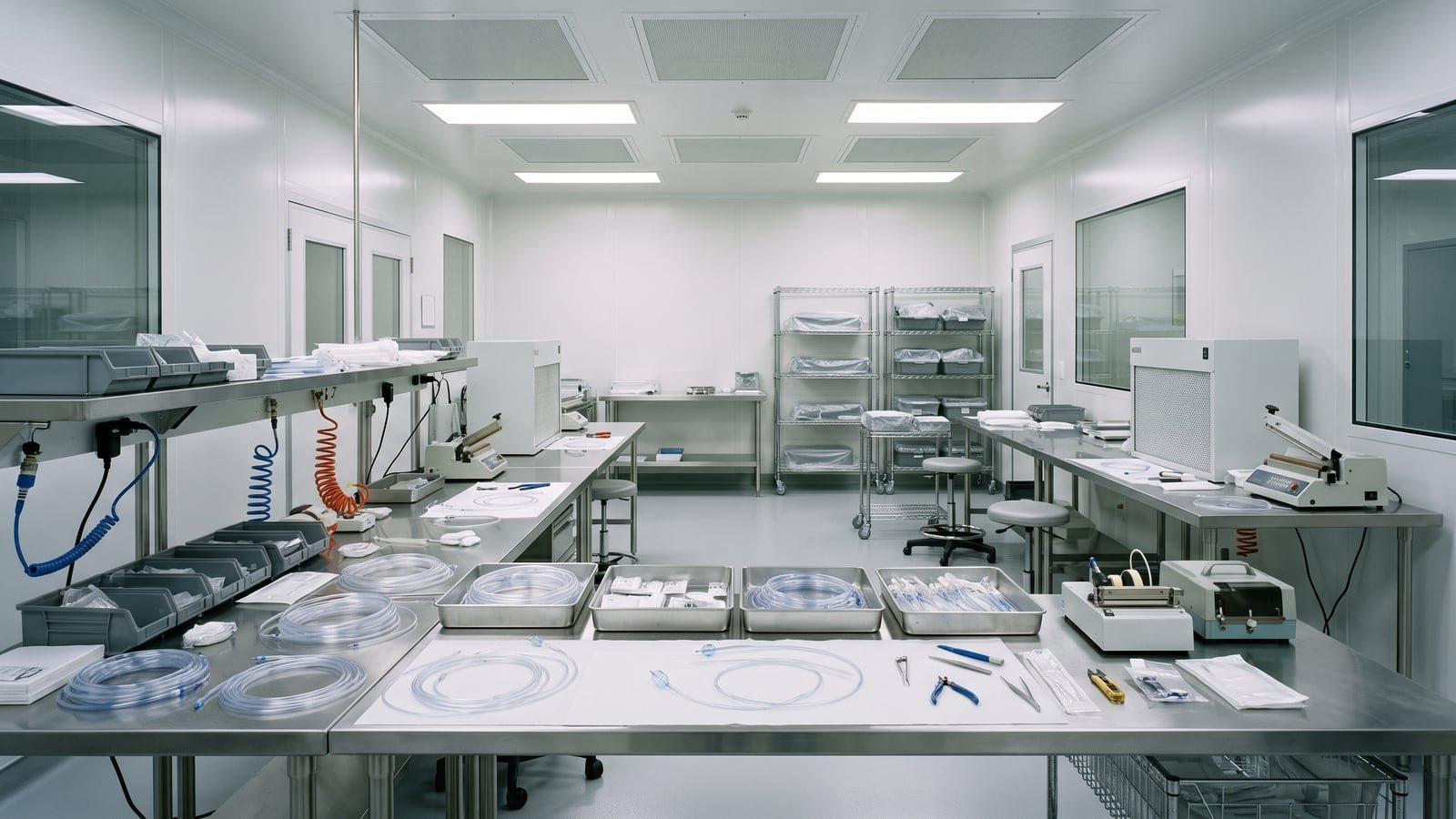
For early-stage MedTech companies, the cost of constructing a certified cleanroom is prohibitive. Shared medical device parks provide pre-certified ISO cleanrooms (Class 7 and 8) on a timeshare basis. By distributing operational, cleaning, and regulatory maintenance costs across multiple companies, the cluster ensures that local SMEs can prototype medical devices under GxP-compliant conditions from day one.
2. Collaborative Metrology and Calibration Hubs
Precision calibration of manufacturing tooling, pipettes, pressure sensors, and temperature controllers is critical to maintaining ISO 13485 (Medical Devices Quality Management Systems) certification. In Irish MedTech parks, local calibration hubs provide shared access to coordinate measuring machines (CMM), optical comparators, and automated calibration rigs. This localized infrastructure eliminates the transit delays and custom risks associated with international calibration shipping.
Document Control & Calibration Logs: The Client-Side Paradigm
With shared infrastructure comes a vital compliance challenge: document control and GxP data integrity. When multiple organizations share testing, calibration, and prototyping facilities, they generate thousands of validation reports, cleanroom logs, and equipment calibration certificates. Under FDA ALCOA+ data integrity guidelines, these files must be meticulously formatted, stamped, and archived-without compromising the IP (Intellectual Property) or patient data privacy of the individual companies.
Uploading sensitive calibration logs, design files, or clinical validation records to cloud-based PDF tools exposes companies to potential data leaks, compliance audits, and security vulnerabilities. To mitigate this, MedTech manufacturers require a secure, zero-server document processing tool.
Secure, Client-Side GxP Document Control with Priya LifePDF
Priya LifePDF is designed specifically for high-compliance environments. Running entirely in the local browser via WebAssembly (WASM), Priya LifePDF processes document conversions, PDF/A validations, page stamping, and PDF optimization locally. No calibration sheets, device specifications, or verification documents are ever uploaded to an external server-providing total data confidentiality and instant compliance.
Access Priya LifePDF WorkspaceIntegrating Priya LifePDF into shared MedTech park workflows offers key GxP advantages:
- 100% On-Premise Data Confidentiality: Intellectual property remains within the local network. Calibration logs, device testing sheets, and QA signatures never cross the internet.
- Automated PDF/A Compliance: Rapidly convert calibration logs and cleanroom entry logs into the PDF/A format required for long-term regulatory archiving.
- WASM-Powered Document Optimization: Compress massive multi-megabyte CAD drawing exports and medical validation dossiers directly in the browser, making them compact and ready for HPRA submissions.
A Shared Infrastructure Readiness Checklist for MedTech SMEs
If you are an SME leveraging shared facilities or localized suppliers within the Irish MedTech network, use this checklist to ensure compliance and audit-readiness:
| Compliance Area | Audit Question & Assessment | Verification Mechanism |
|---|---|---|
| Calibration Traceability | Are shared metrology instruments traceably calibrated against national standards (NSAI)? | Inspect calibration certificates and verify calibration history labels on the equipment. |
| Data Integrity (ALCOA+) | Are calibration sheets and cleanroom validation files processed securely without cloud exposure? | Standardize on Priya LifePDF client-side editor. Audit network traffic to ensure no document data is uploaded to remote servers. |
| Cross-Contamination | Are cleanrooms equipped with strict, documented cleaning protocols between product switches? | Review shared facility logbooks, pressure differential logs, and cleaning validation records. |
| IP Isolation | Is access to shared rapid prototyping workstations and local network storage secure? | Verify directory-level permissions on local NAS units and user authentication logs on active terminal nodes. |
Conclusion: The Future of MedTech in Ireland
The shift toward localized MedTech value chains and shared infrastructure is more than just a temporary buffer against supply chain issues. It represents a fundamental structural evolution that makes Irish medical device manufacturing faster, more collaborative, and highly resilient.
By leveraging regional clusters, sharing state-of-the-art calibration and prototyping assets, and utilizing security-focused local utilities like Priya LifePDF to maintain document control, Irish MedTech firms are establishing the gold standard for GxP-compliant, highly agile, and secure medical device engineering.