
Workplace equality is no longer just a corporate buzzword; it is a critical macroeconomic imperative for Ireland. As industries experience talent shortages, unlocking the potential of under-represented groups and returners is vital. At the forefront of this movement is WorkEqual, an Irish national charity dedicated to empowering women back into employment, advocating for workplace equity, and driving systemic change across all sectors of the Irish economy.
Originally established to provide professional styling and career coaching, the organisation has evolved into a nationwide influence, partnering with state agencies, corporate networks, and local communities to dismantle the barriers that prevent individuals from achieving economic independence.
Our Vision, Mission, and History
WorkEqual was founded in 2011 by TV presenter, designer, and social entrepreneur Sonya Lennon. What began as a localized Dublin initiative providing styling and interview preparation has grown into a powerful national community supported by approximately 200 dedicated volunteers. WorkEqual continues to benefit from Sonya's tireless support and strategic input on its board and committees.
The core pillars of the charity's modern operations are clear:
- The Vision: An Ireland that is a world leader for inclusive, respectful, and equitable workplaces.
- The Mission: To provide innovative, targeted services and programmes that help women (re)entering the workplace to reach sustained economic independence.
- Advocacy: Promoting workplace equity, fair remuneration, social mobility, and complete gender parity in the Irish workplace.
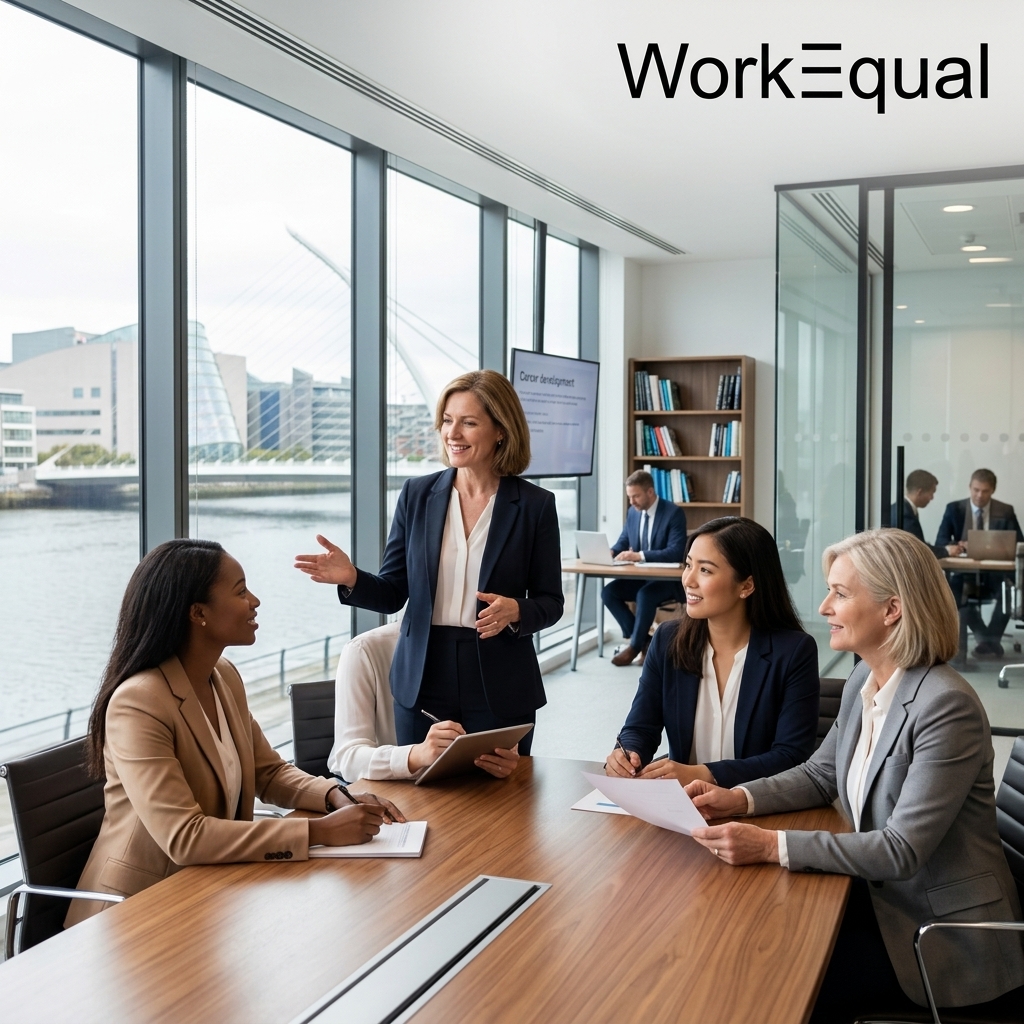
The Executive Leadership & Governance
WorkEqual is a registered charity and a company limited by guarantee, operating under strict governance and transparency standards. Its financial accounts are prepared in accordance with the Statement of Recommended Practice (SORP) guidelines and are independently audited. The organisation reports annually to the Charity Regulator and files with the Companies Registration Office (CRO), maintaining a comprehensive Risk Register alongside data protection and safeguarding policies.
Behind this structure is a highly experienced leadership team and a dedicated Board of Trustees:
The Executive Team
- Su Duff (CEO): Bringing over 20 years of experience in retail buying, marketing, and cross-industry leadership.
- Ellen Downes (Client Service Manager): A DCU Business Studies graduate leading client interaction and event management.
- Laura Barnes (Community Manager): Holding a Harvard MBA and a UCD MCL, Laura also practices as a family law mediator.
- Savanah Kelleher (Client Coordinator): Holding a UCD Smurfit MSc in Management, Savanah manages bilingual community operations.
- Michelle Madden (Project & Impact Executive): A UCD MA graduate with extensive copywriter and project execution experience.
Board Trustees
The charity’s board is led by Chairperson Aideen Cardiff (an experienced tech director who has led senior divisions at three global technology firms) since 2023. Other trustees include: Shane Dempsey (Secretary General of the Association of Consulting Engineers of Ireland), Leon Diop (Social activist, Global DEI speaker, and CEO of Black and Irish), Chryssa Dislis (Business transformation and organisational health expert), Patrick O'Donnell (Global technology leader at Onesto Consulting), and Dr. Louise Gorman (Assistant Professor at Trinity College Dublin specializing in corporate governance and sustainability reporting).
Driving Workplace Equality: Five Core Focus Areas
WorkEqual conducts extensive campaign and advocacy work centered on five distinct pillars of workplace equity:
| Focus Area | Core Advocacy Goal |
|---|---|
| Caring Responsibilities | Ensuring that domestic caring duties do not disproportionately penalize women’s career progression or lifetime earning potential. |
| Societal Gender Norms | Dismantling historical biases that steer men and women into segregated roles, encouraging gender-neutral career paths. |
| Flexible Working | Championing right-to-request remote and hybrid working frameworks as a tool for workforce inclusion. |
| Women in Leadership | Creating promotion pipelines for returners, establishing target-led hiring in under-represented sectors, and introducing State-guaranteed credit schemes for female entrepreneurs. |
| Gender Pay Gap | Lobbying for transparent reporting, fair remuneration, and actionable plans to close the pay differential in public and private organisations. |
The WorkAbility Programme: An Inclusive Pathway to Re-entry
Expanding beyond its female-focused core services, WorkEqual has teamed up with Grow Remote to deliver the WorkAbility Programme. This multi-week initiative is open to both men and women who identify as having a visible or invisible disability and are seeking to re-enter the workforce.
The term "disability" is defined broadly to ensure maximum accessibility, encompassing physical challenges, long-term health conditions, mental health difficulties, chronic pain, and neurodivergence. The programme is specifically designed to help participants become work-ready for remote, hybrid, or in-person employment.
Program Features:
- Tailored Pathway: A structured 3-month (12-week) journey that can be commenced during any month of the year.
- Blended Delivery: A combination of 1:1 expert mentoring, interactive online workshops, in-person training sessions, practical workbooks, and mock interview practice.
- Flexible Exit: If a participant secures employment before the 12 weeks are complete, they are free to step off the programme to start their job.
- Zero Cost: The programme is fully funded and free of charge for all eligible participants.
For those interested in exploring whether the WorkAbility Programme is the right fit, WorkEqual hosts regular, 30-minute online information sessions for potential applicants and community partners.
Conclusion
WorkEqual’s multi-faceted approach-combining immediate, practical career services with national systemic advocacy-makes it a unique and vital contributor to the Irish social landscape. By supporting women and individuals with disabilities back into fulfilling, sustainable employment, the charity does not just change individual lives; it builds a stronger, more resilient, and equitable economy for all of Ireland.