
In the packaging industry, as in pharmaceuticals, the fundamental competitive question is increasingly one of scale. The ability to guarantee security of supply, absorb regulatory compliance costs, invest in high-specification print technology, and serve multinational customers across multiple markets is becoming a prerequisite for relevance - not a differentiator. For independent, mid-sized packaging specialists, the choice has gradually narrowed: grow, consolidate, or be consolidated.
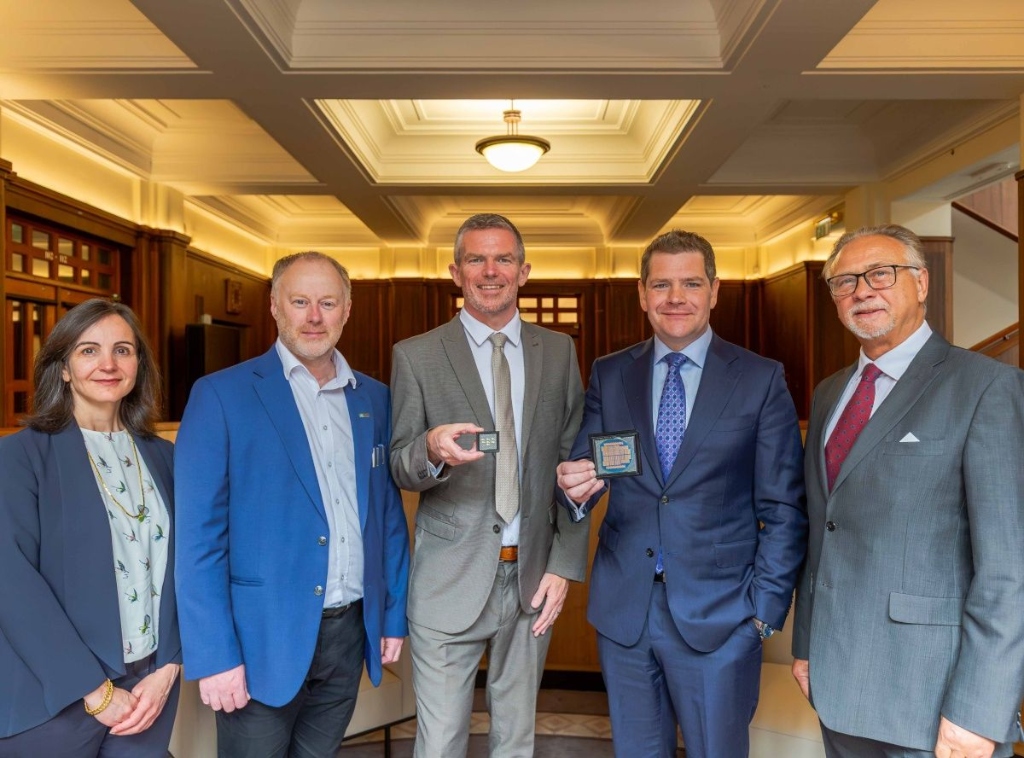
Woodberry Packaging, the rapidly expanding group backed by Dublin-based private equity firm Woodberry Capital, has been making the first choice with notable consistency. On July 7, 2026, the group announced the simultaneous acquisition of Medica Packaging and F.G. Curtis - two of the UK's most respected specialist packaging manufacturers - in a transaction that reshapes the landscape for pharmaceutical and personal care packaging in Britain and Ireland.
What Has Been Acquired
Medica Packaging is not simply a pharmaceutical packaging business. It is, by most industry accounts, the UK's largest independent pharmaceutical carton converter - a company whose output reaches patients across the NHS supply chain and whose quality systems must meet the exacting Good Manufacturing Practice (GMP) standards that pharmaceutical packaging demands. Its cartons contain the medicines, the patient information leaflets, the dose instructions that are the final physical interface between a drug manufacturer and a patient. In that context, Medica's position is not merely commercial - it carries a genuine public health dimension.
F.G. Curtis brings a different but complementary expertise. Specialising in cosmetics and personal care packaging, Curtis has operated in a sector where aesthetic precision, colour consistency, and tactile quality are as important as structural integrity. The personal care and cosmetics packaging market demands a different kind of excellence from pharmaceutical packaging - and Curtis has built its reputation on delivering it.
Critically, Medica itself had already acquired F.G. Curtis in 2022, recognising the strategic logic of combining pharmaceutical rigour with personal care creativity under one roof. Woodberry's acquisition of Medica therefore brings both businesses into the group as an already-integrated unit - reducing integration risk and preserving the operational continuity that pharmaceutical supply chains require above all else.
| Company | Primary Sector | Key Strength | Joined Woodberry |
|---|---|---|---|
| Medica Packaging | Pharmaceutical packaging | UK's largest independent pharma carton converter | July 2026 |
| F.G. Curtis | Cosmetics & personal care packaging | Premium print quality; beauty & personal care sector expertise | July 2026 (via Medica) |
| Reelvision Print | Pharma & veterinary packaging | Advanced one-pass flexo printing; high-volume folding cartons | 2024 |
| Incodia & PCS | Gift, loyalty & membership cards | Specialty card print; diversified revenue stream | 2023 |
| Colorman | Commercial print (Dublin) | Foundation acquisition; Irish market anchor | 2021 |
The Group's Scale After the Deal
The numbers that define the enlarged Woodberry group are significant for the independent packaging sector in the UK and Ireland:
- ~650 employees across the combined UK and Irish operations
- Combined annual turnover exceeding €120 million (approximately US$137 million)
- A presence spanning pharmaceutical, healthcare, cosmetics, personal care, veterinary, and specialty card sectors
- Operations across multiple sites in the UK and Republic of Ireland
Both Medica Packaging and F.G. Curtis will continue to operate under their existing brand names and management teams - a deliberate structural choice that reflects Woodberry Capital's philosophy of preserving the customer relationships, supplier trust, and staff continuity that define the value of these businesses. In pharmaceutical packaging in particular, where customers are multi-year, audit-heavy relationships built on validated processes and documented quality systems, management continuity is not a soft benefit. It is a commercial necessity.
Patrick Doran and the Woodberry Model
The architect of this consolidation strategy is Patrick Doran, CEO and founder of Woodberry Capital, who brings more than 30 years of experience in the UK and Irish packaging industry to the group. Doran's track record is not theoretical: he previously built Americk Packaging into a major UK packaging group before successfully selling it to the Spanish packaging giant Saica in 2016 - a transaction that remains one of the most significant private exits in the UK independent packaging sector in the past decade.
Woodberry Capital is deliberately structured as a non-institutional private equity firm, emphasising long-term value creation over short-horizon exit strategies. This distinction matters in practice: it means the group can make patient capital decisions - investing in equipment upgrades, quality systems, and talent development - without the quarterly return pressure that characterises many institutional PE-backed roll-ups. For the management teams and employees of Medica and Curtis, that distinction is more than a financing technicality. It is a signal about the kind of ownership they are joining.
The group's growth trajectory since its founding acquisition of Colorman - a Dublin-based commercial printing group acquired in 2021 - has been methodical and sector-focused. The 2023 acquisitions of Incodia and Precision Card Services (PCS) added specialty card print capabilities. The 2024 acquisition of Reelvision Print, which uses advanced one-pass flexo technology for pharmaceutical and veterinary cartons, deepened the group's pharma credentials. The July 2026 double acquisition of Medica and Curtis is the culmination of that strategy - adding the UK's largest independent pharmaceutical converter to a group that now has genuine scale across the full spectrum of regulated and premium packaging.
Why Pharmaceutical Packaging Consolidation Is Accelerating
The Woodberry deal is happening against a backdrop of structural forces that are driving consolidation across the pharmaceutical packaging sector at a pace not seen since the early 2000s.
Regulatory demands on pharmaceutical packaging have intensified significantly over the past decade. Serialisation requirements, track-and-trace mandates, revised GMP guidelines for packaging operations, and the increasing complexity of patient information leaflet requirements for multilingual markets have all increased the compliance cost burden for packaging manufacturers. Smaller independent operators - even excellent ones - are finding it progressively harder to absorb those costs while remaining price-competitive with larger groups that can amortise compliance investment across higher volumes.
Simultaneously, the pharmaceutical manufacturers who are the primary customers for companies like Medica are themselves consolidating - through the wave of M&A activity that has characterised the sector since 2020 - and are increasingly seeking fewer, larger, more capable packaging partners capable of supporting multi-market, multi-product programmes across integrated supply chains. The packaging supplier that can serve a pharma customer's UK, Irish, and European operations from a single group relationship, under a single quality agreement, with a single audit programme, is structurally advantaged over the single-site independent.
For Woodberry, the Medica and Curtis acquisition is therefore not simply a revenue-growth play. It is a strategic positioning move in a market that is becoming structurally more demanding - and where being large enough, capable enough, and credible enough is becoming the baseline requirement for retaining existing business, let alone winning new contracts.
What the Deal Means for the UK and Irish Pharma Supply Chain
From a supply chain perspective, the emergence of a 650-person, €120 million+ packaging group anchored in pharmaceutical carton conversion is a genuinely significant development for the UK and Irish life sciences sector.
The UK pharmaceutical industry - operating within a regulatory framework that increasingly requires demonstrated security of supply and domestic manufacturing resilience, particularly in the post-Brexit environment - has been actively seeking stronger, more stable domestic packaging partners. The consolidation of Medica, Curtis, and Reelvision under the Woodberry umbrella creates a single group with the capacity, the quality credentials, and the financial stability to serve as a strategic packaging partner for major pharmaceutical manufacturers on a long-term basis.
For the Irish market, the Woodberry group's Dublin roots - through Woodberry Capital and the original Colorman acquisition - give it a natural advantage in serving the extraordinary concentration of US pharmaceutical manufacturing operations in Ireland. With 19 of the world's top 20 pharmaceutical companies operating manufacturing sites in Ireland and pharmaceutical exports exceeding €139 billion annually, the demand for high-quality, GMP-compliant packaging services in the Irish market is substantial and growing. A group of Woodberry's scale and pharma expertise is well-positioned to capture a meaningful share of that demand.
Looking Ahead
With five acquisitions completed since 2021 and a combined group now generating over €120 million in annual revenue, the question for Woodberry Capital is what comes next. The group's stated strategy of building a significant, diversified print and packaging business in the UK and Ireland suggests that the appetite for further acquisitions remains - and that the July 2026 deal, significant as it is, may be a waypoint rather than a destination.
For Medica Packaging and F.G. Curtis, joining the Woodberry group offers access to greater resources, shared operational expertise, and the financial backing to invest in the equipment upgrades and digital capability that will define competitive advantage in pharmaceutical packaging over the next decade. For their customers - pharmaceutical manufacturers who depend on these businesses for the cartons that carry their medicines to patients - the deal represents, above all, a strengthening of the supply chain partners they rely on.
In an industry where the consequences of packaging failure extend far beyond a commercial loss, that stability is the most important product of all.
Sources: Packaging Insights; Certus Card Group; Medica Packaging (medicapackaging.com); Woodberry Capital (woodberrycapital.com); Reelvision Print; Print Business UK; The Packaging Portal; Paper Industry World; Geldards LLP; Irish Times; Nub News.